A Thousand-Year-Old Pink: Finding Our Brand Color in a Dunhuang Cave
A soft pink in a book of Dunhuang’s ancient ceiling patterns reminded me of the color I had chosen for Flamingo Mahjong. What began as a personal discovery became a reflection on cultural heritage, design, and the connections we build around a mahjong table.

Sometimes, the universe confirms your choices in the most unexpected places.
Last time, I promised to tell you about a color I found in a cave. Here it is.
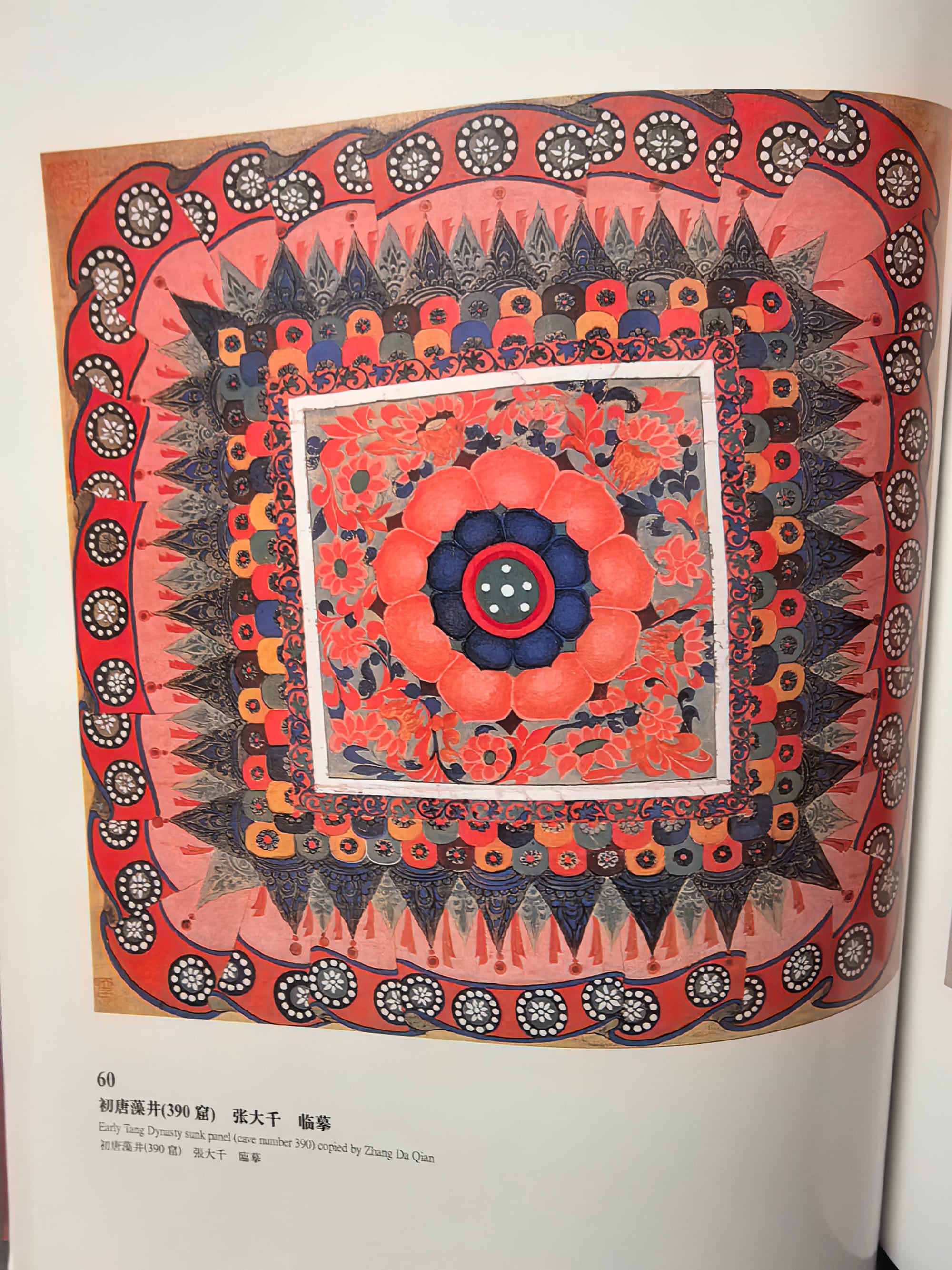
It happened on an ordinary evening, after my daughter had gone to sleep. I was sitting at the small desk in our hotel room, flipping through a book I’d bought in Dunhuang—a collection of zaojing (藻井) reproductions, the ancient decorative ceiling patterns I’d become obsessed with.
I turned a page, and my hand stopped.
There it was. A soft, warm pink—muted, gentle, and unmistakably there. It wasn’t the dominant color, just a quiet accent in a corner of a larger pattern. But it caught my eye.
I reached for my phone and opened our brand color file. I held the screen next to the page.
It wasn’t identical. But it was close enough to make my breath catch.
The Pink That Earned Its Softness
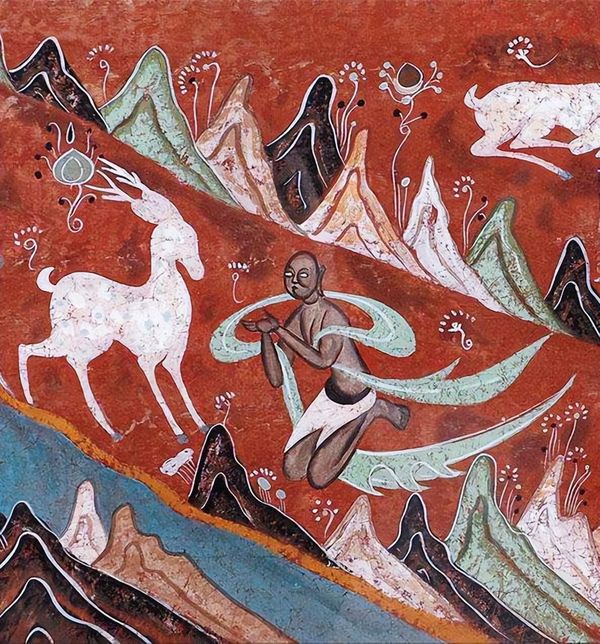
This is how the colors of Dunhuang are being rediscovered today—not in a paint factory, but at a workbench like this. Contemporary artists continue to study traditional pigment-making methods, grinding minerals by hand, mixing pigments, and exploring techniques passed down through generations as they work to recreate the colors of ancient murals. Among the many hues they seek to understand and revive are the captivating pinks found throughout Dunhuang’s murals and decorative ceiling patterns, each with its own subtle character.
In traditional Chinese color culture, pink is not just one color with one name. Shades of pink have long been described through poetic names such as Tao Yao, Yanzhi, and Feise, each carrying its own cultural associations and sense of beauty. The pinks of Dunhuang are just as varied. We are not trying to match a particular pigment to a specific shade on an ancient wall. Instead, we are exploring how these beautiful colors might inspire a contemporary design—and perhaps find a new expression in Flamingo Mahjong.
This wasn’t the pink of a candy store.
It was the pink of desert light on ancient stone. A color that seemed to have earned its softness over centuries.
The colors in Dunhuang’s murals were created through the craft and knowledge of generations of artists. Mineral pigments were among the materials used, ground and prepared for painting on cave walls. The precise materials and techniques varied, and a particular shade cannot be identified simply by looking at a photograph or a reproduction.
I didn’t know the exact recipe behind the pink I had noticed. I still don’t. And I didn’t need to know every chemical detail to appreciate what I was seeing.
What moved me was the thought that someone, centuries ago, had made deliberate choices about color, balance, and beauty—and that those choices could still speak to someone looking at them today.
When I tell people my brand color is flamingo pink, I sometimes get a polite smile. I can imagine the question: Pink? For mahjong? Isn’t that a little too light?
That page in the book made me think differently.
This pink wasn’t light in the sense of being insignificant. It was gentle without being empty. It had presence without demanding attention.
And that distinction matters to me as a designer and a brand builder.
How Flamingos Become Pink
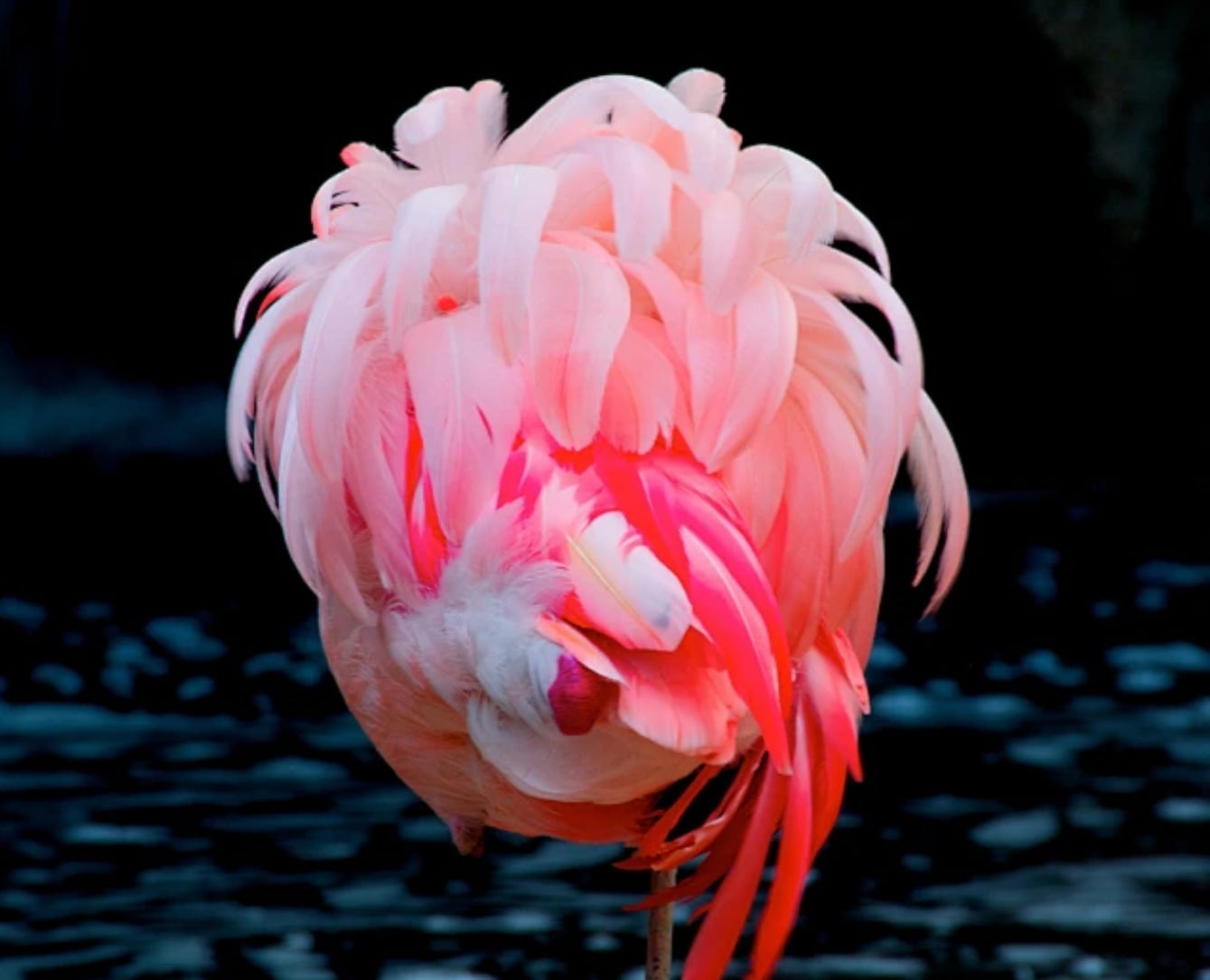
There’s something about flamingos I didn’t fully appreciate until after I’d chosen them as our symbol.
They aren’t born pink.
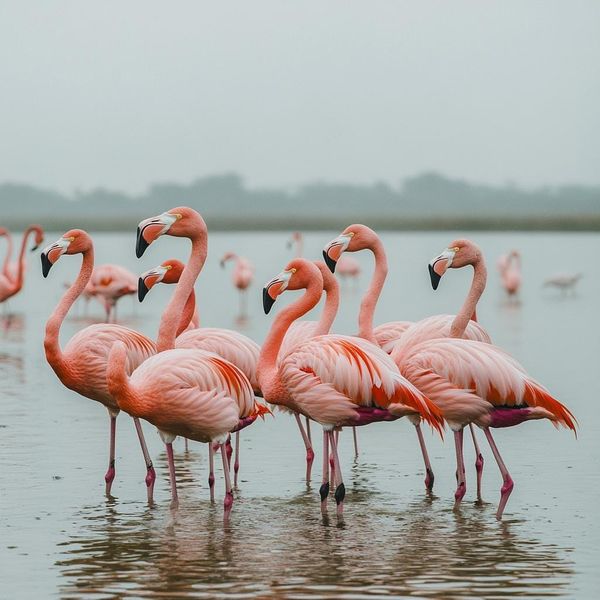
Flamingo chicks hatch with pale grayish or white down. As they grow, pigments called carotenoids in their food contribute to the pink coloration of their feathers. Their diet can include algae and small aquatic animals such as brine shrimp that contain these pigments.
Their color develops over time. It is shaped, in part, by what they eat and how they live.
A flamingo’s pink is not simply a birthright. It is a biography.
That idea stayed with me.
I want Flamingo Mahjong to be more than a label stamped onto a product. I want the brand to take shape through the choices we make, the people we gather, the games we play, and the tables we return to week after week.
Find Your Flock. It’s not just a marketing slogan. It’s an invitation to discover the people and experiences that help you become who you are.
Two Pinks, One Message
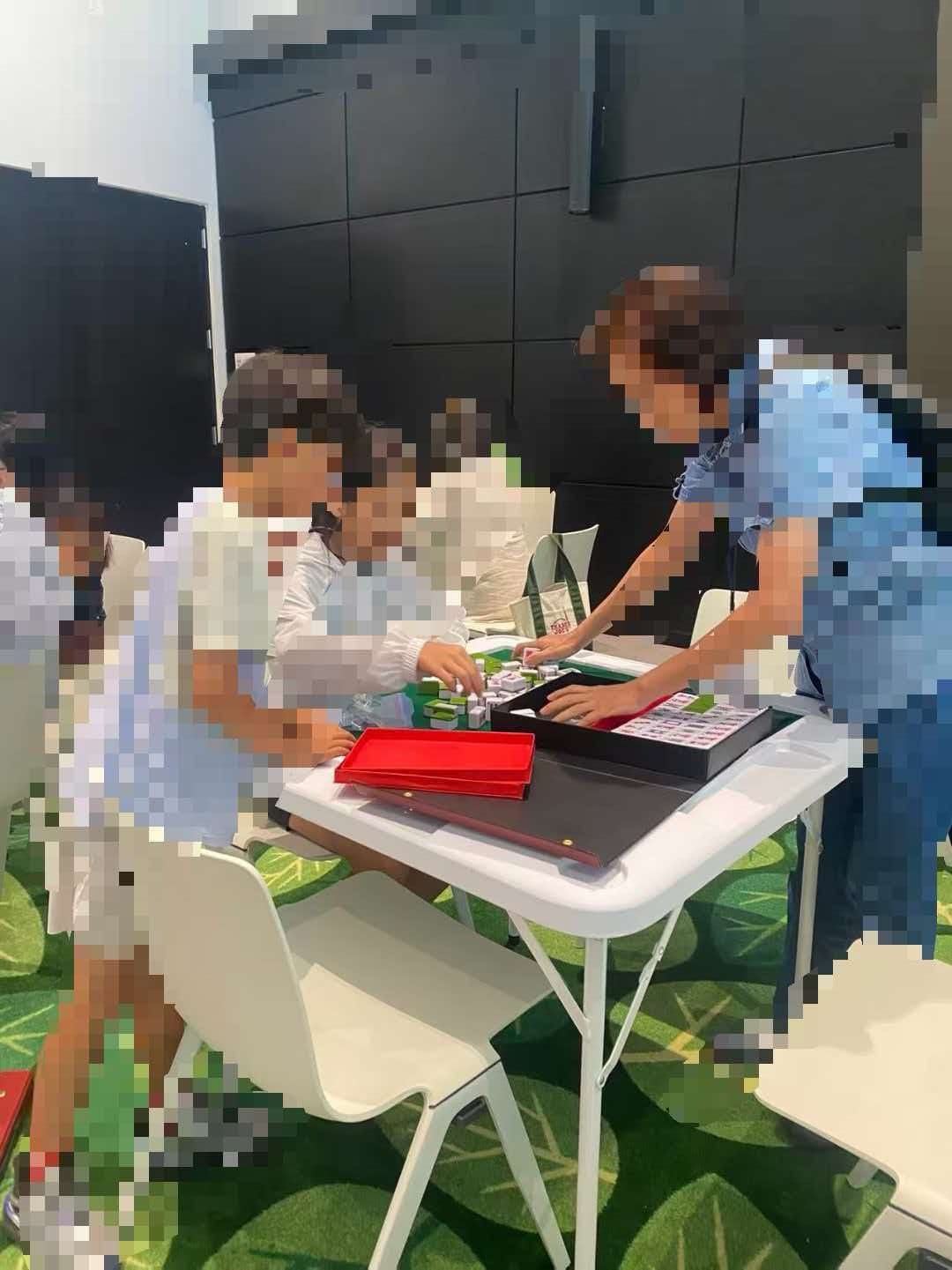
Around that time, I saw something that made me think about all of this differently.
A friend of mine living in the United States shared a photo of a mahjong afternoon organized by her community. Adults sat around the tables, tea was being poured, and her ten-year-old son sat nearby, learning the tiles alongside the grown-ups.
This is what Find Your Flock looks like.
No one needed to make a big speech about community. They were simply spending time together, sharing a game across generations.
Around the same time, I came across a LinkedIn post about an American sports club seeking a mahjong instructor. The idea caught my attention: after physical activity, members wanted another way to connect, and mahjong was part of that picture.
A sports club. Hiring a mahjong teacher.
I found that striking—not because one post can explain an entire culture, but because it offered another glimpse of the many settings in which people are making room for face-to-face play.
We often talk about connection as though it were something that can wait until everything else is finished. Yet sometimes the simplest way to reconnect is to sit down, learn a game, and give other people our attention.
The pink I noticed in the Dunhuang patterns and the pink of a flamingo are not the same thing. One belongs to a visual tradition shaped by human hands and historical materials; the other is a living color shaped by biology and diet.
But they inspired a shared idea for me: color can carry a story of how something becomes what it is.
And some of the best stories are shaped over time, in the presence of others.
What This Pink Will Become

So where does this thousand-year-old pink go from here?
I don’t want it to remain just a story I tell. I want the ideas behind it to find a place in something people can hold, use, and share.
Flamingo Mahjong has always been guided by two ideas: social connection and cultural depth. Now, I have a color story that brings those ideas together.
We’re exploring Dunhuang Pink as a possible companion shade to our signature Flamingo Pink.
To me, Flamingo Pink feels like a party—bright, playful, alive. Dunhuang Pink feels like a hundred desert sunsets: quieter, more grounded, a little more patient.
Ten centuries of sunset in one color.
Perhaps a future collection will carry both. One pink that says “tonight.” Another that says “always.”
This is an idea we’re exploring, not a finished product decision. The work of translating historical inspiration into contemporary design takes time. A color must work with the materials, the overall composition, and the practical realities of a mahjong set. Most importantly, the result should feel thoughtful in its own right—not merely borrow the authority of the past.
I want to learn from Dunhuang, not simply copy it.
The Past Is Still Speaking
I used to think I was building something entirely new.
The cave and the patterns in that book reminded me that creating something new doesn’t mean starting from nowhere. Sometimes it means finding a connection with something that came before us, then deciding what to do with that discovery.
Centuries ago, artists ground pigments, prepared surfaces, and painted patterns they hoped would endure. Their work continues to invite new eyes and new interpretations.
And now, one of those patterns has found its way into the thinking behind a modern mahjong brand.
That doesn’t make our work equivalent to theirs. It gives us a reason to approach our own work with greater care.
The more I explore mahjong, design, and the communities forming around the game, the more I believe that a product can carry more than a visual identity. It can carry a story—and create an occasion for people to gather around it.
That is what I hope Flamingo Mahjong will do.
Until then, I have a question for you:
What color makes you feel at home?
Reply and let me know. I’d love to hear your story.
If you’re interested in the intersection of mahjong, cultural inspiration, design, and community, subscribe to Find Your Flock to follow the journey.
🦩 Find Your Flock.
— Emirry Zhang
Founder, Flamingo Mahjong
Further Reading
- Zhang, Tianlong, et al. (2024). “Colors of Dotted Stone: The Colorful World of Dunhuang Murals.” University Chemistry, 39(6), 238–245. Read the article
- Smithsonian’s National Zoo and Conservation Biology Institute (June 29, 2021). “Why Are Flamingos Pink? And Other Flamingo Facts.” Read the article
The historical and scientific sources above provide background on mural pigments and flamingo coloration. The connection between these colors and Flamingo Mahjong’s design direction is the founder’s personal interpretation.