Why I Traveled 2,000 Miles to Find Inspiration for Mahjong Tiles
How a journey to Dunhuang, from desert landscapes to ancient ceiling patterns, helped shape the visual direction and cultural vision of Flamingo Mahjong.
From Tencent strategist to mahjong brand founder—and the ancient caves that changed how I think about design.
I never imagined I would leave a career in technology to build a mahjong brand.
For a decade, I worked at Tencent, one of China's largest technology companies. My work involved B2B strategy, project manager, product operations, and partnerships. I learned how to bring people together around a shared goal, turn ideas into plans, and make complicated things work.
It was a good career: challenging, stable, and full of opportunities to learn.
But something was missing.
I wanted to build something of my own. Something tangible. Something that could bring people together in a way they could see, touch, and experience.
That desire eventually led me to mahjong—and to a journey thousands of miles west, into the desert landscapes of Dunhuang.

Why Mahjong?
If you've ever sat around a mahjong table, you know the feeling.
The clack of the tiles. The laughter when someone makes an unexpected move. The friendly competition. The conversations that continue long after the game should have ended.
Mahjong is more than a game. For many people, it's a reason to gather—a familiar ritual that gives friends, families, and even strangers something to share.
That idea became central to the brand I wanted to build.
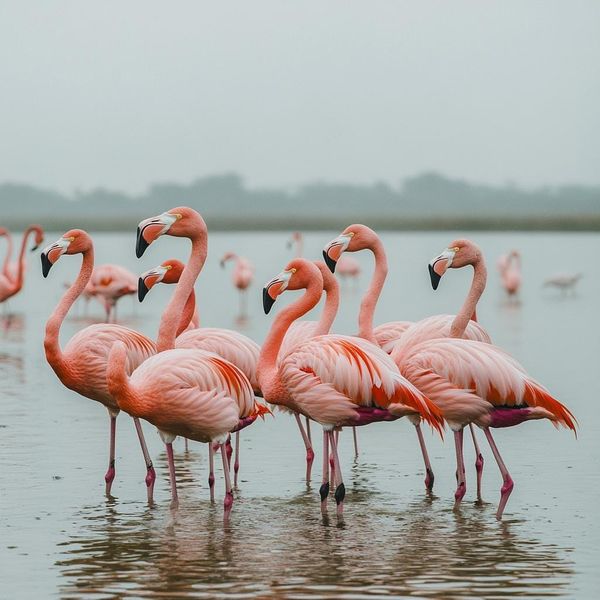
Flamingos gather in flocks. People, too, need places where they can connect and feel that they belong.
Our slogan, Find Your Flock, grew out of that belief.
But a meaningful slogan wasn't enough. I wanted the brand to have a visual language of its own: one that felt fresh and contemporary while respecting the cultural history behind the game.
I began asking myself a question:
What would it look like to bring the beauty of Eastern art into the lives of modern mahjong players around the world?
To explore that question, I packed my bags and traveled to Dunhuang.
Dunhuang: Where Cultures Met
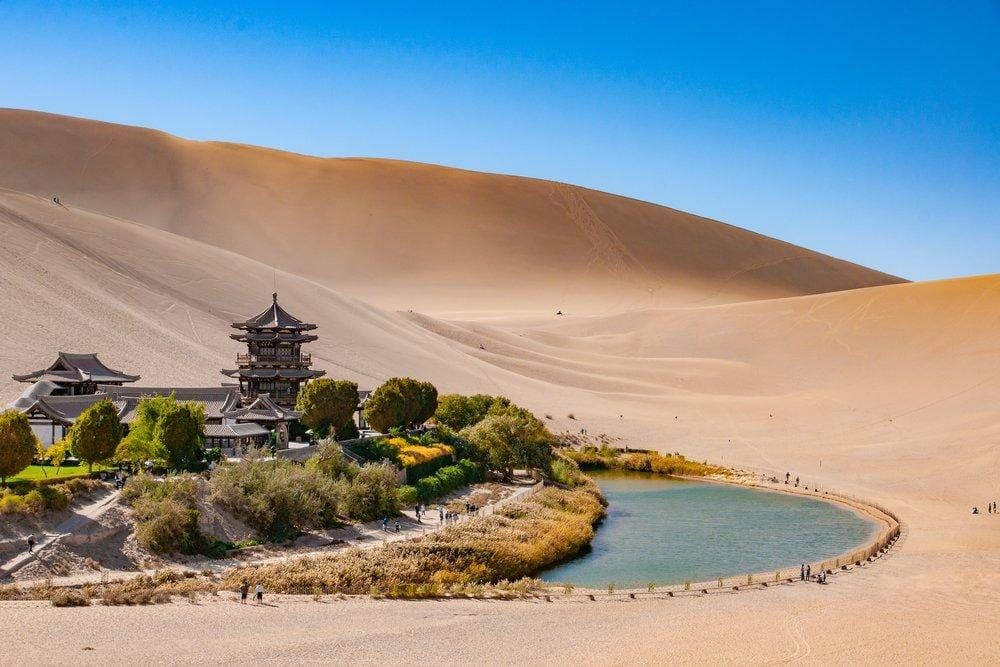
Dunhuang was once an important oasis along the ancient Silk Road, where people, goods, and ideas traveled across cultures.
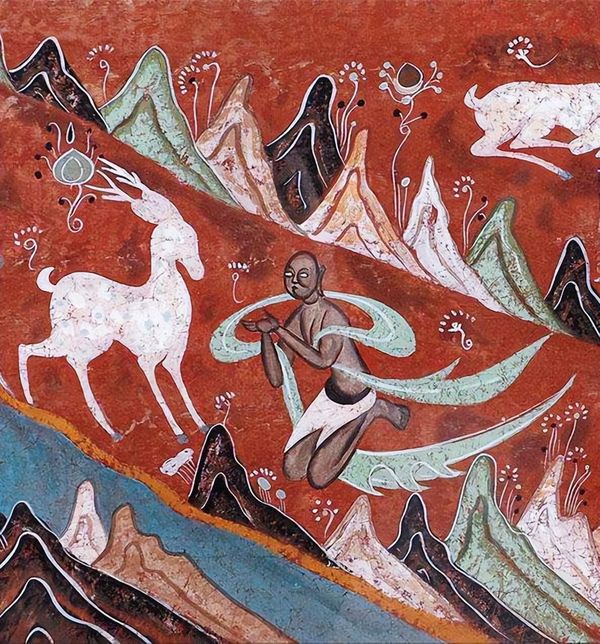
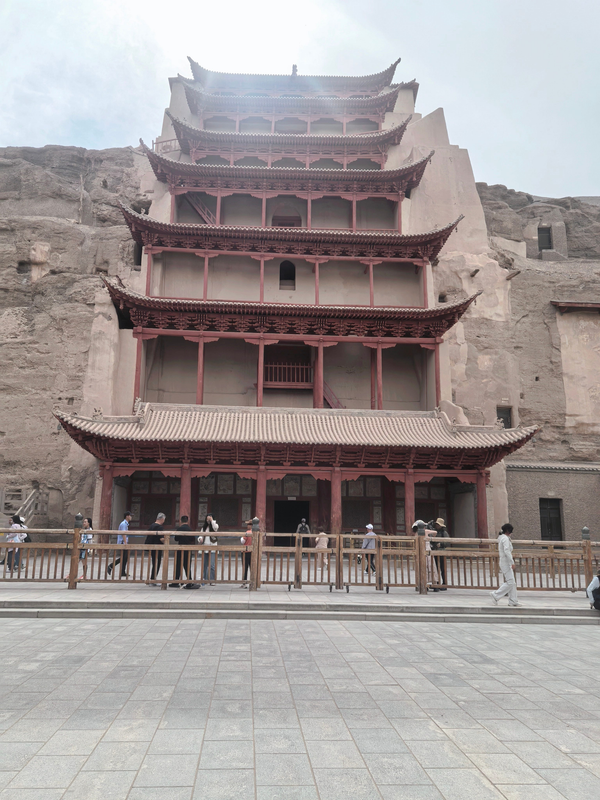
One of its most extraordinary legacies is the Mogao Caves, a remarkable collection of Buddhist art created over many centuries.
According to the Dunhuang Academy, the Mogao Caves contain 735 existing caves, approximately 45,000 square meters of murals, and more than 2,400 painted sculptures. Together, these works preserve a rich record of artistic achievement and cultural exchange along the Silk Road.
I went to Dunhuang looking for inspiration. I didn't yet know exactly what I was looking for—or what I would bring home.
(Source: Dunhuang Academy, October 31, 2025. https://www.dha.ac.cn/info/1018/7175.htm)
What the Desert Taught Me
My first stop was the Yardang National Geopark, where wind and time have shaped the landscape into extraordinary formations.
Standing among the ridges and sculpted rock, I found myself paying attention to colors and textures I might once have passed without a second thought: deep ochre, burnt sienna, dusty rose, and the subtle shifts of light across the earth.
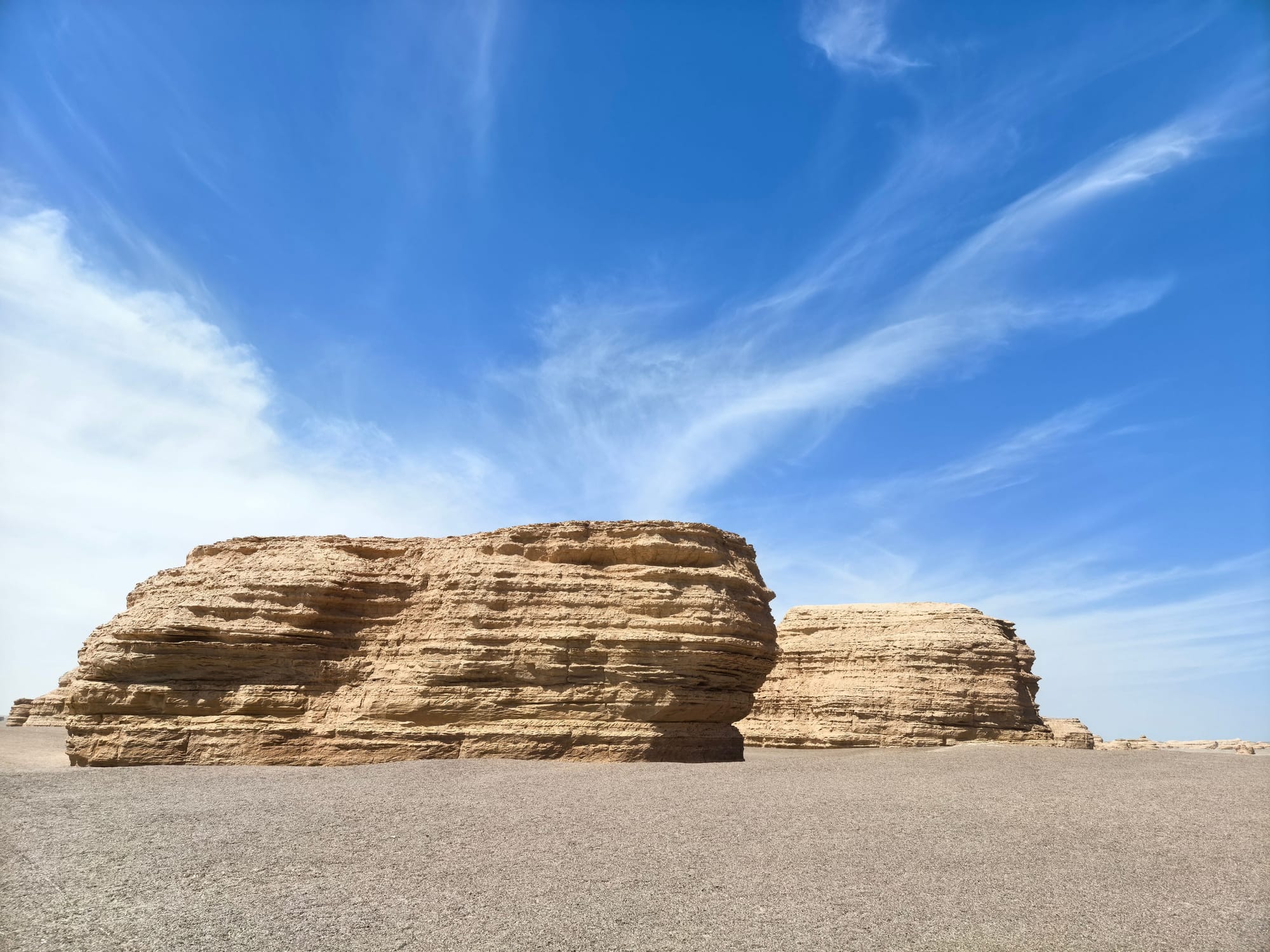
The landscape felt like a natural color palette.
I began to wonder: Could these colors and textures find a place on a mahjong tile?
I wasn't looking to reproduce the desert literally. I was looking for a feeling—something grounded, weathered, and quietly beautiful that might translate into a contemporary design.
The next day, I visited Yumen Pass, a historic frontier site associated with the western reaches of the ancient Silk Road.
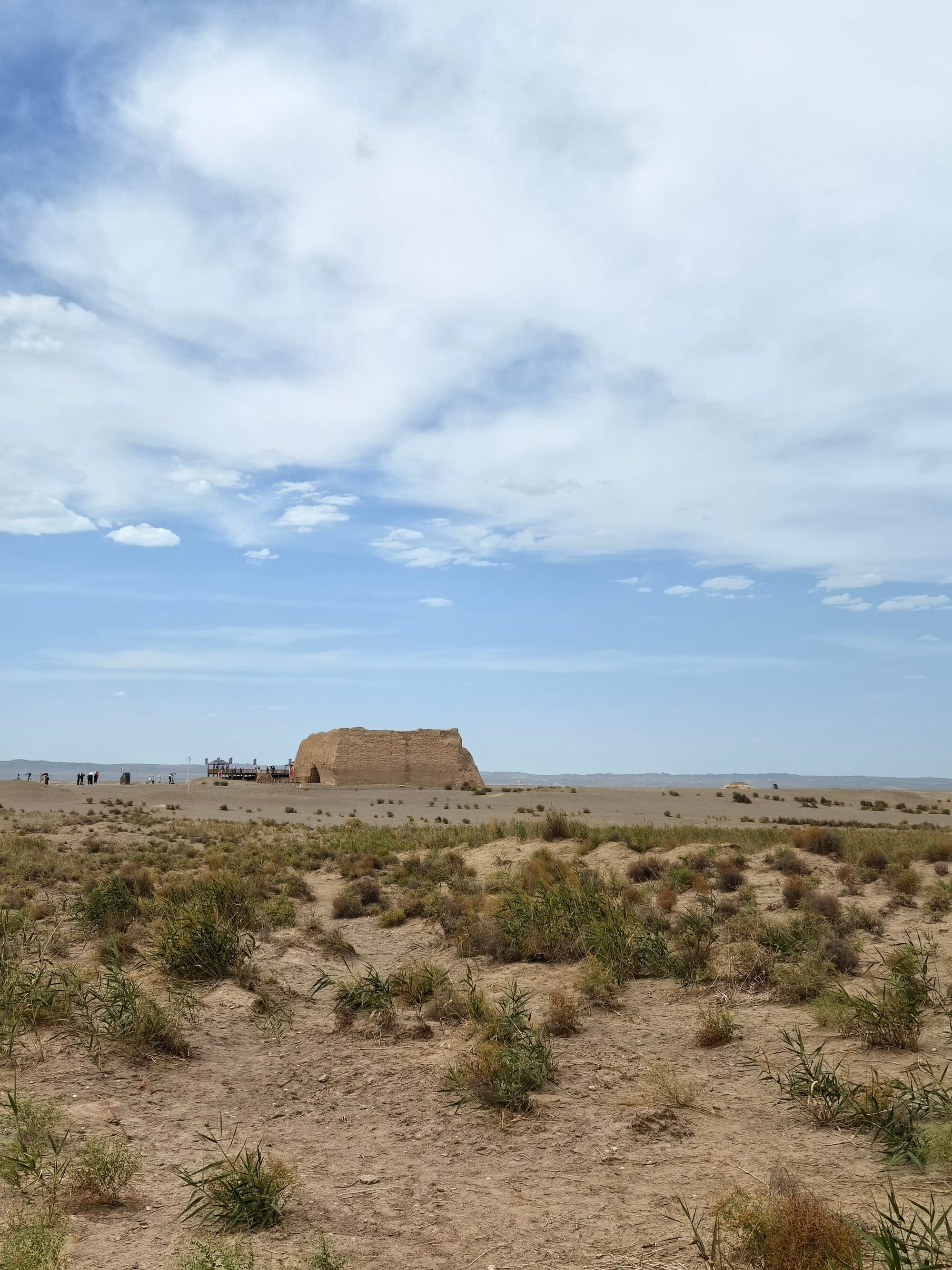
The old rammed-earth walls stood under the open sky. Looking at them, I tried to imagine the travelers who had passed through this region centuries ago, carrying goods, beliefs, stories, and ideas between distant places.
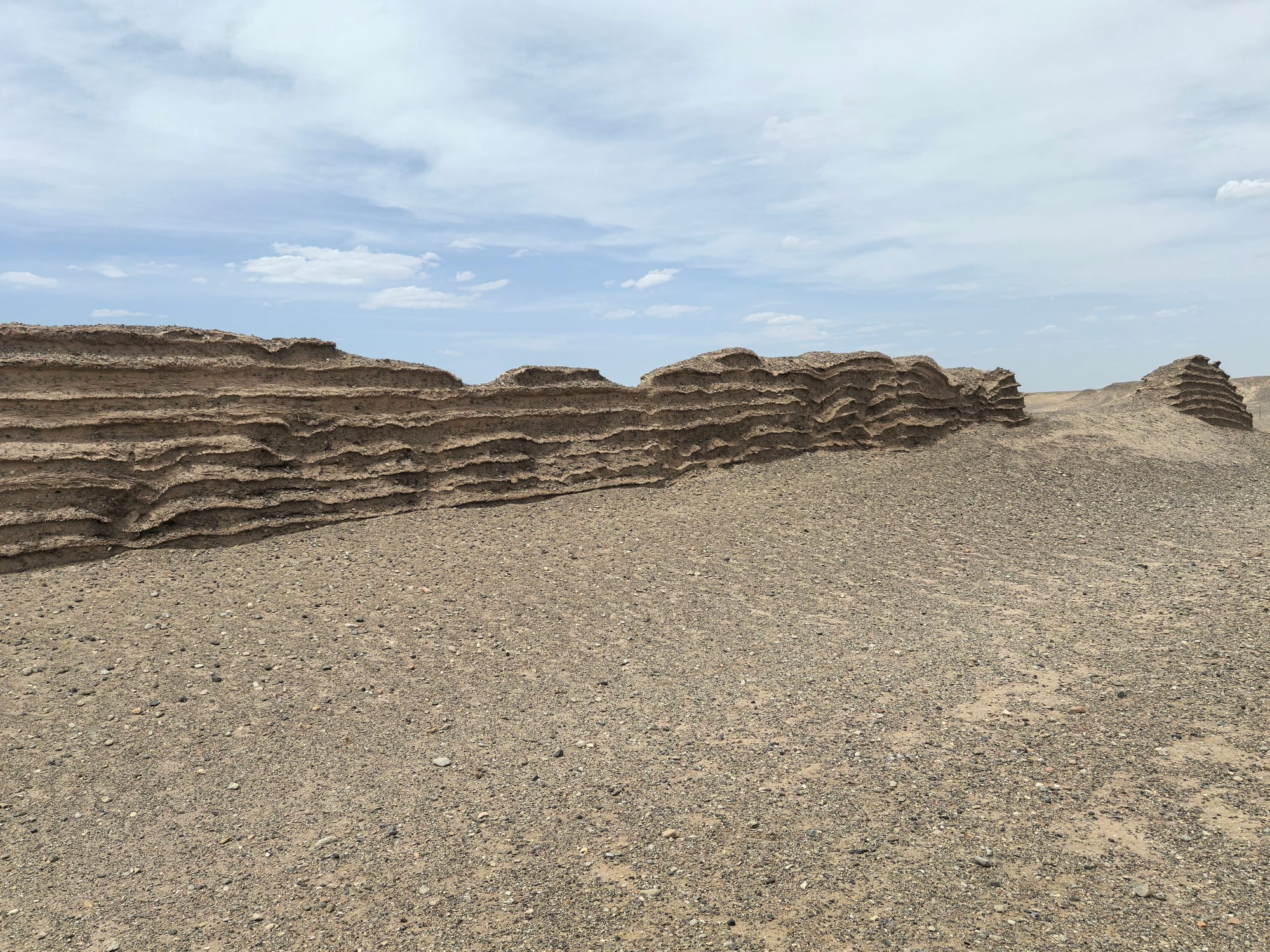
I felt an unexpected connection.
Those travelers helped move things across cultures. In my own small way, I hoped to do something similar: bring a product with deep roots in Eastern culture to people around the world, while making it feel relevant to their lives today.
The comparison isn't exact, of course. But the idea of cultural exchange stayed with me.
The Moment It Clicked
The real breakthrough came later, when I opened a book.
During my journey, I had bought a collection of Dunhuang ceiling-pattern reproductions. The book introduced me to the intricate decorative compositions known as zaojing (藻井), often found on the ceilings of traditional cave temples.
I was drawn to their layered geometry, repeating borders, lotus motifs, curling vines, and carefully balanced compositions.
Then I noticed the pink.
One of the shades reminded me of the pink I had chosen for Flamingo Mahjong.
It wasn't an exact color match. It didn't need to be.
The resemblance felt meaningful because the color appeared within a much larger visual world—one shaped by centuries of art, craftsmanship, and cultural exchange.
I had chosen our brand pink for a contemporary identity. Here, in a collection of historical patterns, I found a visual echo that connected my choice to a much older artistic tradition.
It made me think about how design can travel across time without remaining frozen in the past.
Sometimes, inspiration isn't about finding something entirely new. It's about discovering a connection you hadn't noticed before.
Inspiration, Not Imitation
That distinction matters to me.
I don't want Flamingo Mahjong to become a souvenir brand, simply placing historical motifs onto a product and calling it cultural design.
The more interesting challenge is to understand what makes a visual tradition compelling—and then ask what those principles might mean in a different context.
What makes a composition feel balanced? How do repeating patterns create rhythm? How can a restrained palette still feel rich? Which details deserve attention, and which should be simplified?
A mahjong tile has its own practical constraints. It is small, rectangular, handled constantly, and viewed both individually and as part of a set. A design must work at close range and across a table. It must be beautiful without getting in the way of play.
Those constraints make the process more interesting, not less.
The goal is not to copy the past. It is to learn from it, make thoughtful choices, and create something that belongs in the present.
More Than a Set of Tiles
Looking back, my trip to Dunhuang was about more than finding patterns or colors.
It helped me clarify what I want Flamingo Mahjong to stand for.
I want to build a modern mahjong brand that respects the game's cultural roots while creating products that feel at home in contemporary life. I want design to tell a story, but I also want the product to earn its place on someone's table.
Most of all, I want to support the moments that happen around that table: friends catching up, families sharing a ritual, and people discovering a new community through a game.
The Mogao Caves preserve stories of people and cultures meeting across centuries. That spirit of connection is part of what drew me to Dunhuang—and part of what I hope to carry into this brand.
This is still a journey of discovery. The patterns, colors, materials, and products will continue to evolve as I learn what works and what resonates with players.
I'm glad you're here at the beginning.
Come Along on the Journey
If you're interested in mahjong, design, cultural inspiration, or the process of building a brand from the ground up, subscribe to Find Your Flock by email to receive future stories and behind-the-scenes discoveries.
You can also follow Flamingo Mahjong through the social links on this site for product updates, design explorations, and moments from the journey.
And I'd love to hear from you: Have you ever encountered a place, an artwork, or an unexpected detail that changed how you saw something familiar?
Let's build something beautiful together.
🦩 Find Your Flock.
— Emirry Zhang
Founder, Flamingo Mahjong