Ceilings That Tell Stories: What Dunhuang's Ancient Patterns Can Teach Us About Mahjong Design
What can ancient Chinese cave ceilings teach us about designing for the modern Mahjong table? Explore how Dunhuang's caisson patterns offer lessons in composition, rhythm, and translating cultural inspiration into contemporary products.
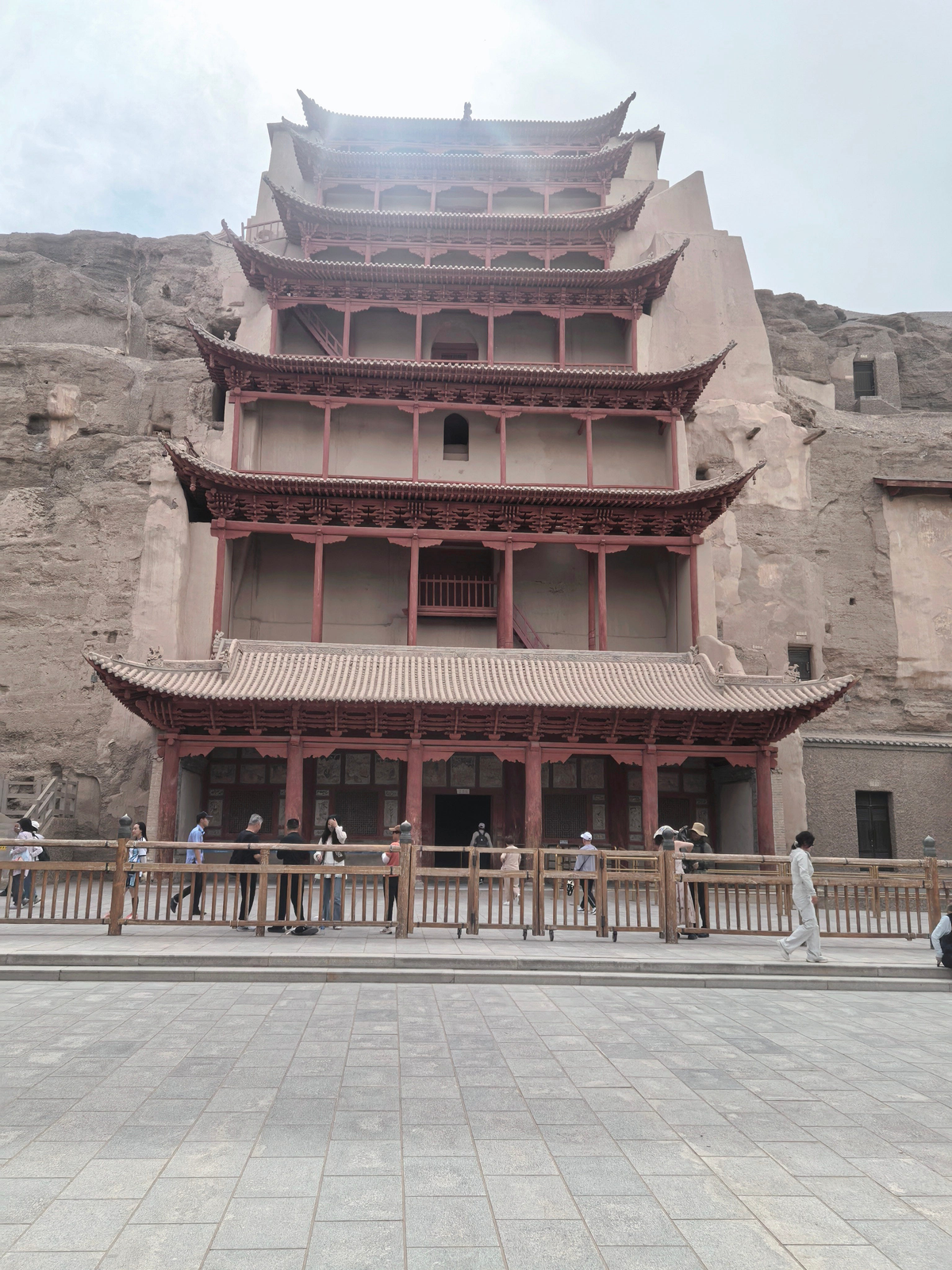
What can a thousand-year-old work of art teach us about designing something for the modern home? For me, the answer begins with looking up.
Looking Up: Where the Inspiration Begins
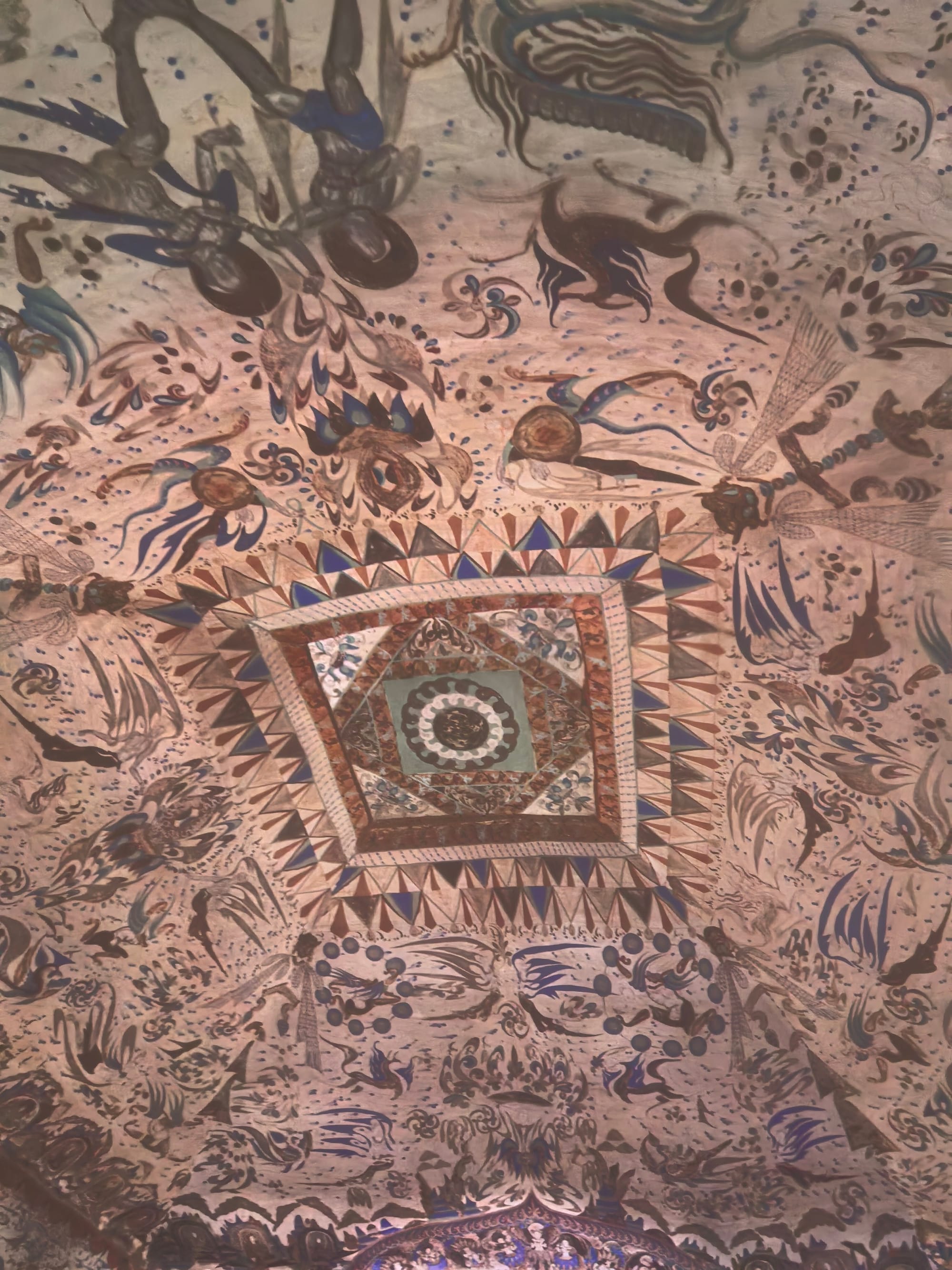
When I began exploring Dunhuang's artistic heritage for Flamingo Mahjong, I found myself drawn to something that might be easy to overlook: the ceilings.
Inside the Mogao Caves, the painted ceilings are more than beautiful surfaces. Their intricate compositions bring together central motifs, surrounding patterns, repeated shapes, and carefully arranged borders. They invite the eye to move through the design rather than simply glance at it.
One particularly fascinating feature is the caisson ceiling, a decorative structure typically found at the center of a cave ceiling. Many examples feature a central motif surrounded by layers of ornamentation. Lotus flowers, curling vines, geometric forms, and other decorative elements appear in different combinations across different periods.
The result is a design language that feels both intricate and organized.
The Mogao Caves preserve Buddhist art created across many centuries. Their visual heritage reflects changing artistic styles and exchanges between different cultural traditions. These are not designs that emerged in a single moment or from one isolated influence. They belong to a much longer story of artistic development and cultural interaction.
For a product designer, that history offers a compelling starting point.
The challenge is not simply to admire an ancient pattern. It is to understand how it works.
More Than Decoration: Understanding the Structure
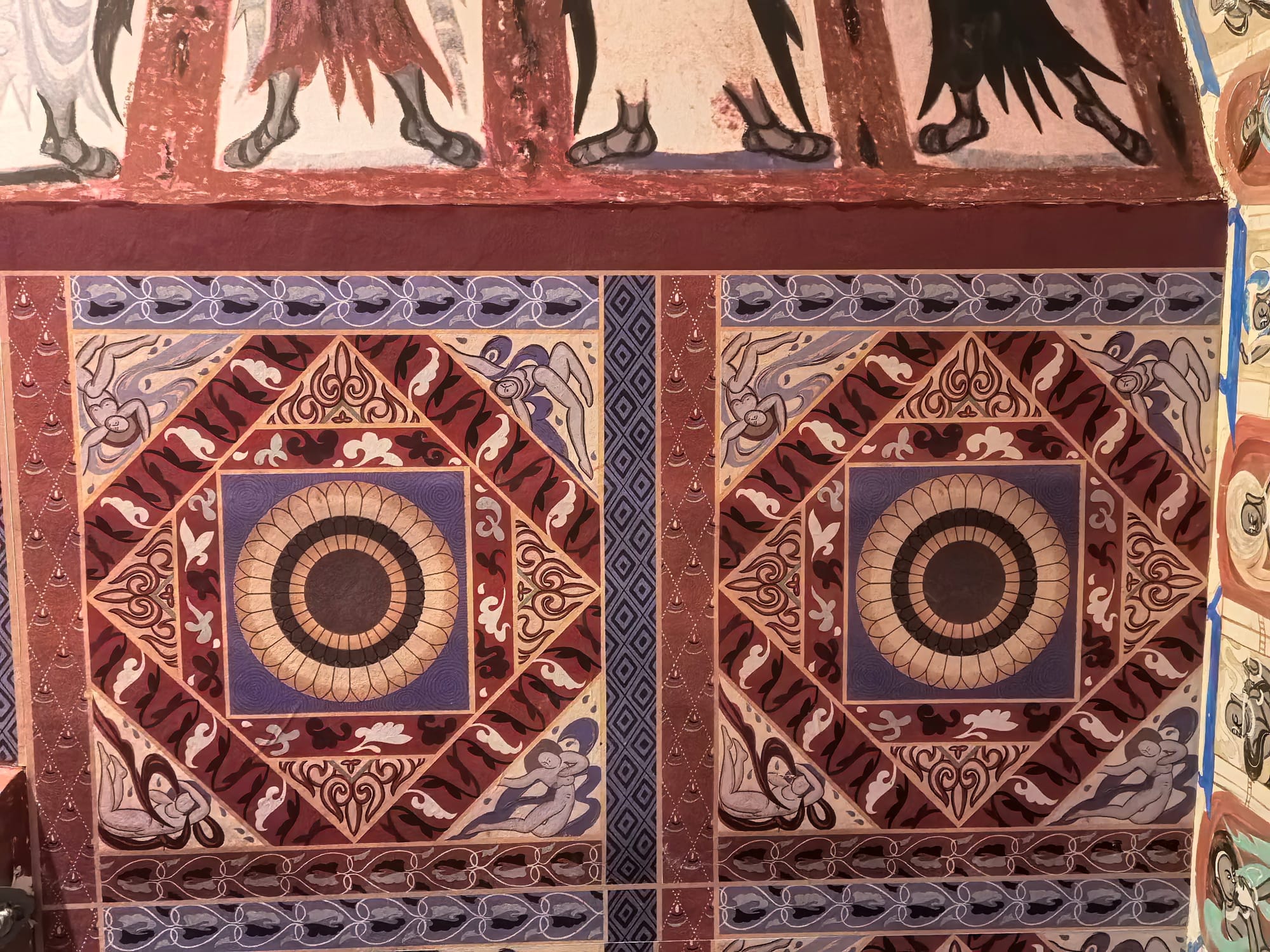
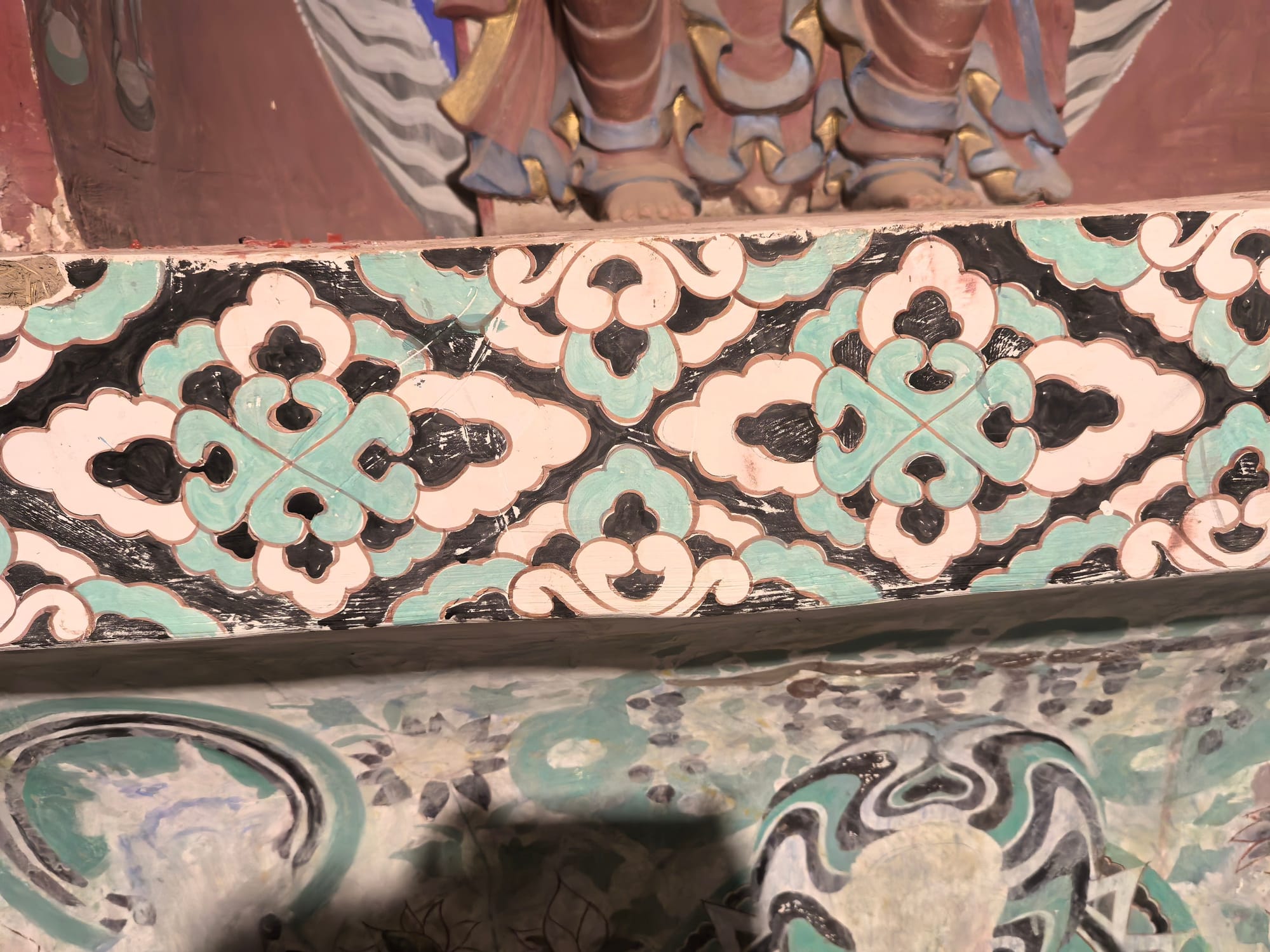
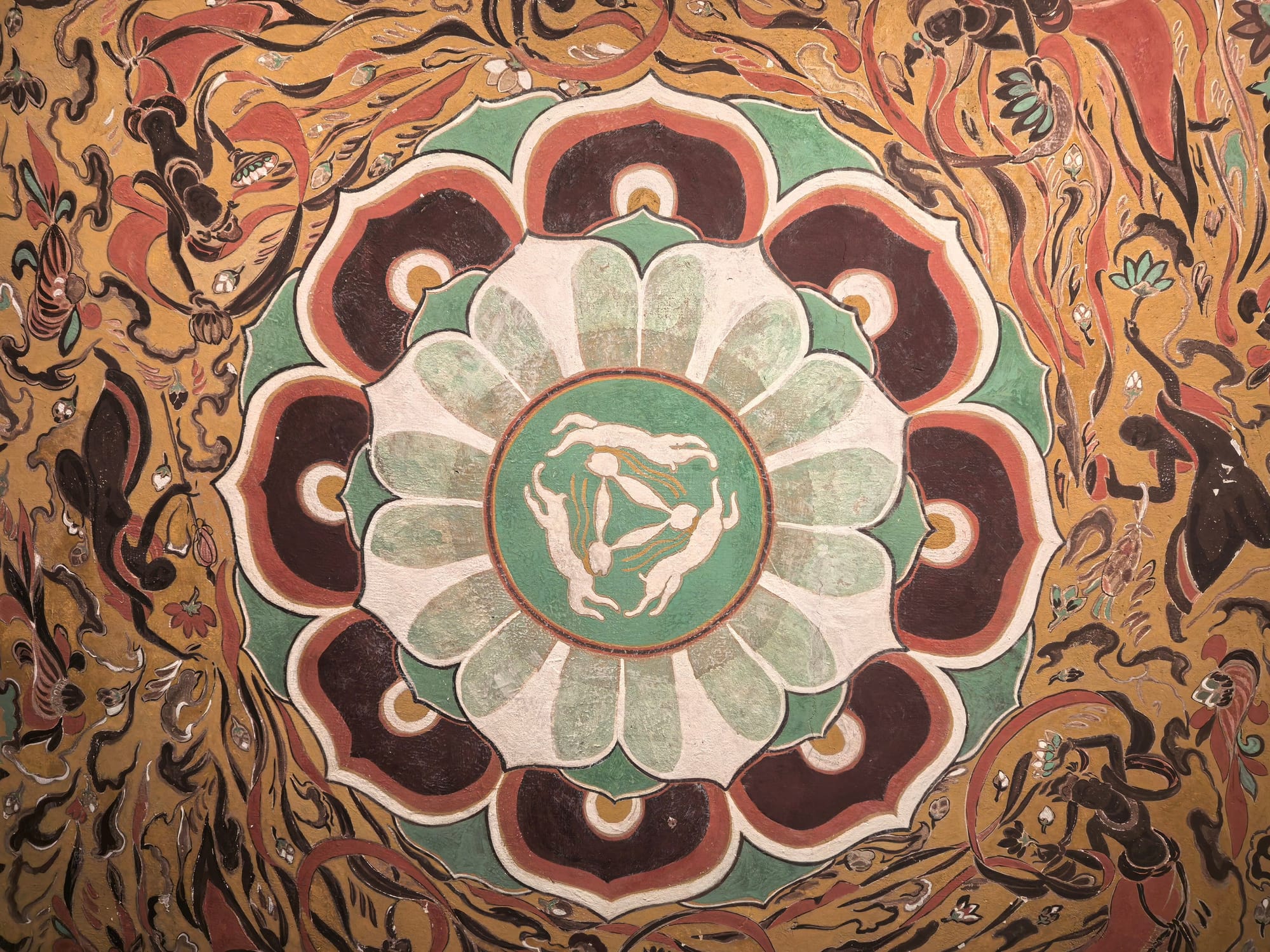
At first glance, traditional decorative patterns can seem complicated. There may be flowers, flowing lines, repeated shapes, and several layers of ornamentation, all occupying the same visual space.
But look more closely, and a sense of order begins to emerge.
The central motif establishes a focal point. The surrounding elements support it. Repetition creates rhythm, while borders help define the composition. Different layers contribute detail without necessarily competing for attention.
This is one reason I find the caisson ceilings so interesting as a design reference. They offer more than a collection of beautiful symbols; they demonstrate ways of organizing visual information.
Consider three principles that can be drawn from this visual language.
1. Give the Eye a Place to Begin
A strong design does not require every element to be equally prominent.
In many caisson compositions, the center provides a clear starting point for the viewer. The surrounding ornamentation builds upon that focal point.
For a modern product, the same principle can help create clarity. A distinctive central motif, a carefully placed emblem, or one memorable color can give a design its identity without overwhelming the entire surface.
The goal is not to make everything stand out.
It is to decide what deserves to stand out first.
2. Create Rhythm Through Repetition
Repetition is one of the simplest ways to establish visual continuity.
In traditional patterns, recurring shapes and motifs can connect different parts of a composition. Their relationships create rhythm, while variations in scale or arrangement keep the design from feeling entirely mechanical.
This idea translates naturally into product design.
A pattern might repeat along the edge of a Mahjong mat. A small motif might appear on packaging and accessories, creating a visual connection across an entire collection. A consistent design detail can make separate objects feel as though they belong together.
Repetition, when used thoughtfully, creates recognition.
3. Let Complexity Have Its Own Order
Traditional art can be richly detailed without feeling random.
The important distinction is between complexity and clutter. Complexity can reward a closer look. Clutter makes it difficult to understand what matters.
For contemporary design, this distinction is especially important.
A pattern that looks extraordinary in a historic setting may feel too busy when applied across a large modern surface. Its colors, scale, and density may need to change before it works in a different context.
The lesson is not that traditional patterns should always be simplified. It is that their complexity needs to be understood before it can be adapted.
From Ancient Ceilings to the Modern Mahjong Table
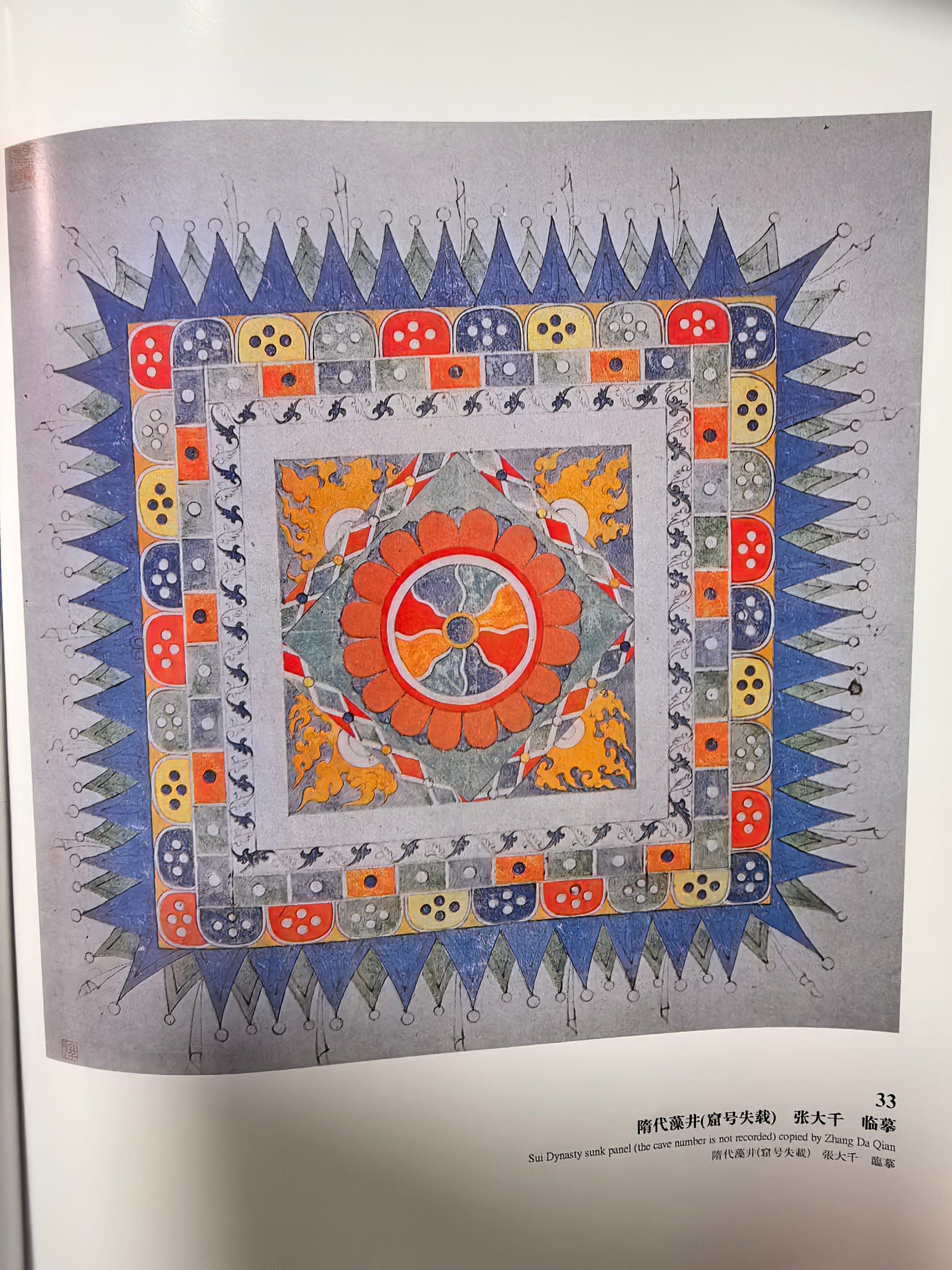
Why does any of this matter to a Mahjong brand?
Because a Mahjong set is more than a collection of playing pieces. It is also an object that enters people's homes, sits on their tables, and becomes part of their social rituals.
In American Mahjong, the table is where friends gather, conversations unfold, and new connections can begin. The objects surrounding that experience contribute to the atmosphere, even when nobody consciously notices their design.
At Flamingo Mahjong, I want to explore how cultural inspiration can enrich that experience without making the product feel out of place in a contemporary American home.
Dunhuang's artistic heritage gives me a rich vocabulary to work with. But the goal is not to reproduce a cave ceiling on a Mahjong mat or turn every tile into a miniature historical illustration.
Instead, I ask different questions.
What happens if we borrow the structure rather than copy the image?
A central medallion might inspire the composition of a mat. A repeating border might suggest a more restrained decorative edge. The relationship between a focal motif and its surrounding elements might guide the layout of a package.
Color offers another avenue for exploration. The palette of a contemporary product does not have to reproduce the colors of a historical mural exactly. It can draw on their relationships, contrasts, and moods while responding to the light, materials, and interiors of modern homes.
These are design interpretations, not claims about the original artists' intentions. The historical artwork provides the reference; contemporary design decisions come from understanding the needs of a different product and audience.
The distinction matters.
A design can be inspired by a cultural tradition without pretending to be a historical reconstruction.
Tradition Is Not a Template
There is a temptation, when working with a rich artistic heritage, to include as much of it as possible.
More motifs. More colors. More historical references. More details that demonstrate where the inspiration came from.
But more is not always better.
A contemporary Mahjong product has practical requirements. The design must coexist with the tiles, the players, the table, and the surrounding room. It needs to be visually appealing without distracting from the game. It should feel distinctive while remaining comfortable to use and live with.
That means making choices.
Sometimes a single geometric relationship can carry more of the original inspiration than an elaborate pattern. Sometimes a restrained palette can communicate a design direction more effectively than a literal reproduction. Sometimes leaving space around a motif is just as important as the motif itself.
For me, this is where the real creative work begins: understanding what makes a historical design compelling, then deciding which qualities can survive the journey into a new context.
The result does not have to look ancient to carry something of the past.
It can look entirely contemporary while retaining a meaningful connection to the tradition that inspired it.
Designing for the Next Generation of Gatherings
Flamingo Mahjong is being built around a simple idea: Mahjong can be a cultural tradition, a design object, and a reason for people to come together.
Those dimensions do not have to compete with one another.
I want to explore designs that respect the depth of their cultural references while appealing to people who may encounter those references for the first time. A person does not need to know the history of Dunhuang to appreciate a thoughtfully designed Mahjong set. But if the design makes them curious enough to ask a question, it can become the beginning of a deeper discovery.
That possibility excites me.
A traditional motif can travel from a cave ceiling to a modern tabletop, not because its original meaning remains unchanged, but because someone has found a thoughtful way to interpret it for a new audience.
This is how I think about the relationship between cultural heritage and contemporary design. Not as a choice between preserving the past and creating something new, but as an ongoing conversation between the two.
The old work offers ideas. The new object gives those ideas another place to live.
And sometimes, that new place is a Mahjong table surrounded by friends.
Follow the Journey
I'm building Flamingo Mahjong and documenting what I discover along the way—from cultural inspiration and product design to the people and stories that make Mahjong meaningful.
If you're interested in Mahjong, design, culture, and the many ways people find connection through shared experiences, subscribe to Find Your Flock for future stories.
Because sometimes, a new idea begins simply by looking up.
Find Your Flock. 🦩
Further Reading