From Tencent to Mahjong: Why I Decided to Build a Brand From Scratch
For a decade at Tencent, I helped entrepreneurs turn ideas into businesses. Then I discovered the growing mahjong community in the U.S. and decided to build Flamingo Mahjong—a brand rooted in connection, culture, and community.
For a decade, I helped entrepreneurs build their dreams. Then I decided to build my own.
For more than a decade, much of my professional life was about helping other people turn ideas into reality.
At Tencent, I worked across B2B communications, project management, product operations, and venture incubation. My work brought me into contact with entrepreneurs, business teams, and people trying to build something new.
I helped shape projects, communicate ideas, connect people, and move initiatives forward. Over the years, my work took many forms—from reports and publications to communications distributed through Tencent's official platforms and coverage across traditional and digital media. It taught me how to translate complex ideas into clear messages, build credibility at scale, and communicate with diverse audiences.
It was rewarding work. I learned how organizations operate, how businesses grow, and how much effort it takes to turn an idea into something people can understand, use, or believe in.
But somewhere along the way, I began asking myself a different question.
What would happen if I put that experience into building something of my own?
I Was Always the Helper. Never the Creator.
For years, I was comfortable being the person behind the scenes.
I could help someone clarify a strategy, structure a project, communicate a vision, or bring different people together. I knew how to support an idea and help other people move it forward.
But supporting someone else's vision and building your own are two very different things.
When you work inside an established organization, there are structures to follow, teams to rely on, and goals that have already been defined. Even when the work is difficult, you are rarely starting from nothing.
Building your own company is different.
You have to decide what is worth building in the first place. You have to live with uncertainty, make choices without complete information, and accept that the results ultimately belong to you.
I didn’t want to help other people build their brands anymore. I wanted to build my own.
That decision did not come from a sudden flash of inspiration. It came after years of experience, reflection, and learning what I wanted the next chapter of my life to look like.
Learning to Look at the World Differently
After leaving Tencent, I spent time investing in the public markets. It was a different kind of learning—one that required independent research, patience, calmness, risk assessment, and the discipline to make decisions without having all the answers. Those lessons stayed with me when I began evaluating a market of my own.
Investing trained me to approach questions from another angle. Instead of focusing primarily on how to execute a project, I had to evaluate an opportunity before deciding whether it deserved my time and capital.
What is the underlying business? What do the numbers actually tell me? What assumptions am I making? What could go wrong? And what would need to be true for an investment to succeed?
It was a different kind of work, but it strengthened habits that would later matter in entrepreneurship: research, independent judgment, patience, and the willingness to change my mind when the evidence changed.
It also taught me an important distinction.
An idea can be interesting without being a good business. A market can look attractive without being right for you. And enthusiasm, by itself, is not a substitute for understanding the people you hope to serve.
I carried those lessons with me when I began exploring what I might build next.
Why Mahjong?
The answer began to take shape as I paid closer attention to the American mahjong community.
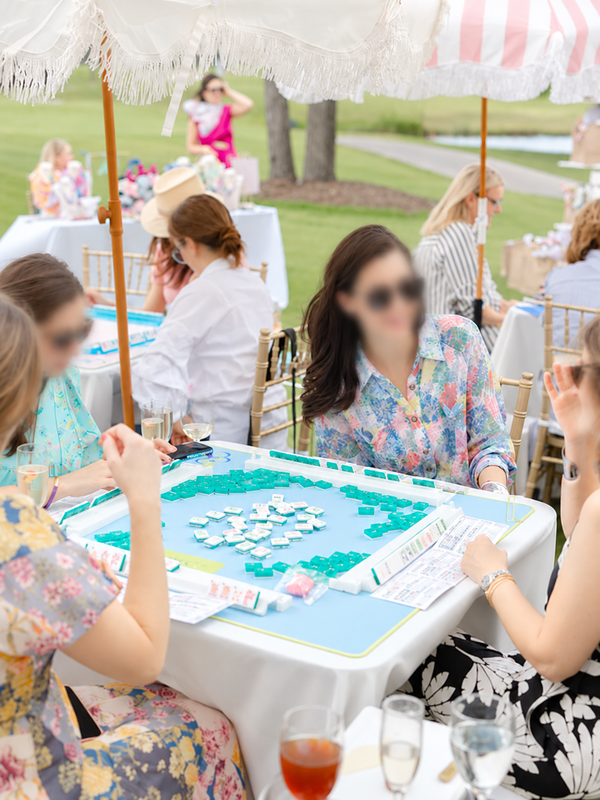
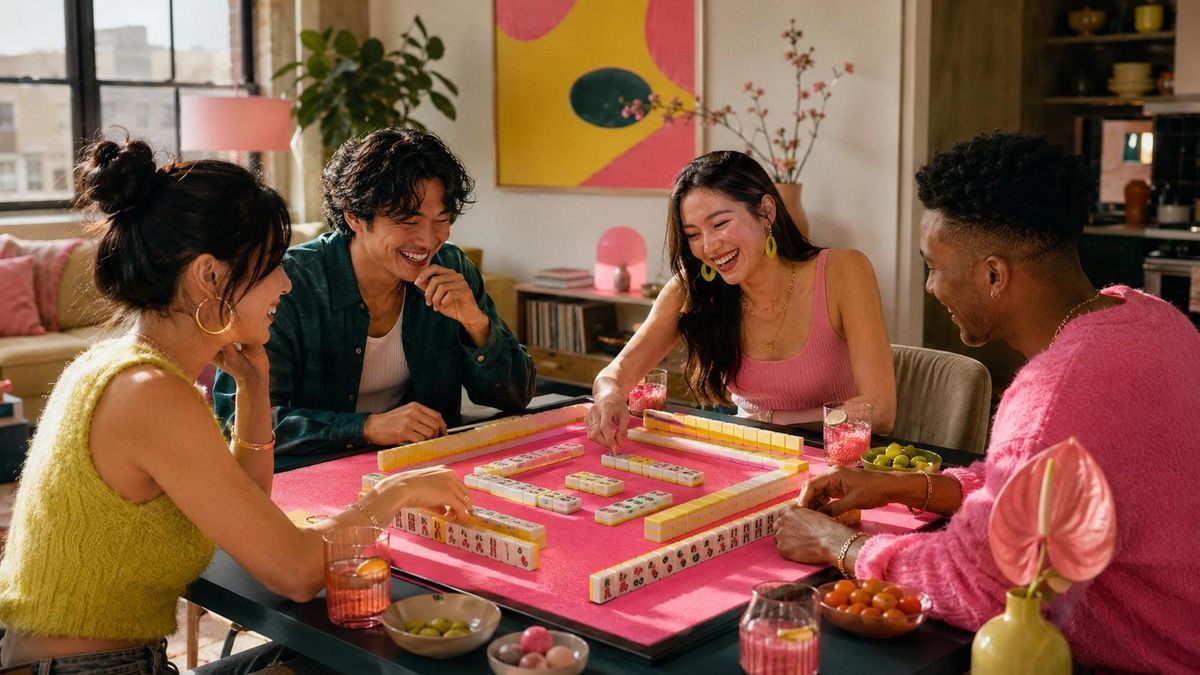
I noticed that mahjong was becoming part of a new generation's social life. People were learning the game, organizing gatherings, joining clubs, and creating opportunities to meet around a table.
What interested me was not simply that a traditional game was attracting new players. It was what the game made possible.
A mahjong table gives people something to do together. It creates a shared focus. You learn the rules, make decisions, read the table, laugh at mistakes, and gradually become more comfortable with one another.
You don't have to be an expert to take part. You don't have to fill every silence with conversation. The game itself gives people a reason to stay, interact, and come back.
That social dimension caught my attention.
In a world where so much of life happens through screens, I began to see value in products and experiences that bring people into the same physical space.
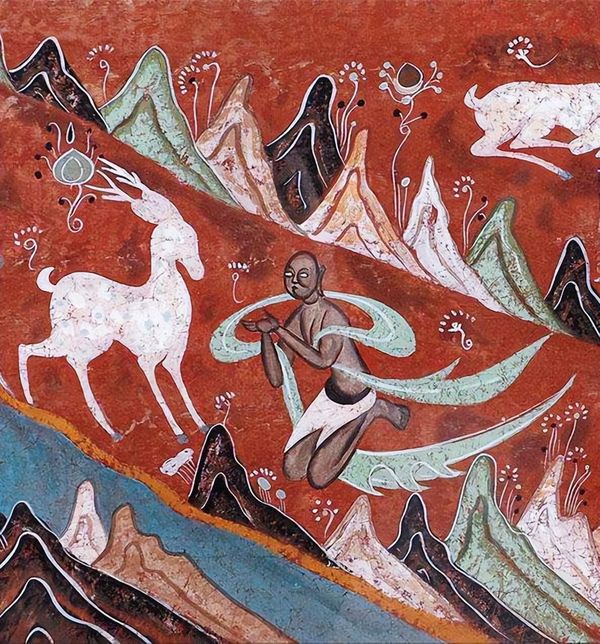
Mahjong was also more than a game to me. It carried a cultural history that I knew from a different perspective, having grown up with mahjong in China. I was interested in what might happen when that cultural familiarity met the needs and tastes of contemporary American players.
Could a brand respect the game's cultural roots while making its products feel natural in modern homes, clubs, and social gatherings?
Could design help people discover a deeper story without making the product feel like a museum object?
And could the business behind it be built around more than selling a box of tiles?
Those questions made mahjong worth exploring.
From an Interesting Idea to a Business
I didn't want to build a company simply because mahjong was interesting to me.
I wanted to understand the market.
Who was playing? Why were people buying sets? What did beginners need? What mattered to experienced players? How did clubs, instructors, retailers, and other businesses approach the game? Where were existing products serving customers well, and where might there be room to do something differently?
I also had to think about the practical side: product specifications, design, manufacturing, quality control, packaging, pricing, and distribution.
The more I looked, the more I realized that creating a mahjong brand would require several kinds of work at once.
It would require cultural understanding, but also commercial discipline. It would require creativity, but also operational detail. And it would require listening to customers rather than assuming that my own preferences would translate directly into the American market.
My background gave me some tools for this journey, but it did not give me all the answers.
That is part of the appeal—and part of the challenge.
I am not building a brand from a position of knowing everything. I am building it by asking questions, testing ideas, talking to people, and learning as I go.
Building Flamingo Mahjong

Why flamingos?
Flamingos are social birds. They gather together and gain strength and joy within their groups. The unique pink color of them comes from the carotenoid pigments in their food.
We are shaped by what we take in, the experiences we share, and the people we surround ourselves with. Like flamingos finding their flock, we become part of something bigger through connection.
That's the spirit behind Flamingo Mahjong.
I want to build a brand that brings people together around a table—not just to play a game, but to share a moment, make a memory, and perhaps find a community of their own.
That is how Flamingo Mahjong began to take shape.
I want to build a modern mahjong brand that brings together thoughtful design, cultural depth, and the social experience of playing together.
The products matter. A set needs to work well, feel good to use, and meet the expectations of the people buying it. A beautiful story cannot compensate for a poorly made product.
But I also believe that products can carry meaning.
A pattern can introduce someone to an artistic tradition. A color can become the starting point for a story. A well-designed set can make a gathering feel special. And a game can become a recurring ritual among friends who might otherwise struggle to find time together.
That is the space I want Flamingo Mahjong to explore: where the practical requirements of a product meet the cultural and emotional reasons people choose to bring it into their lives.
Our slogan is “Find Your Flock.”
To me, it speaks to the people we hope to bring together—not only people who already love mahjong, but also people who are looking for a new hobby, a shared ritual, or a community they can belong to.
I don't have a big team or a big budget. We are still early in this journey. The designs will evolve. The products will improve. Our understanding of the market will deepen.
And some of our assumptions will inevitably prove wrong.
I think that is worth documenting, too.


Building in the Age of AI
There is one more difference between starting a company now and starting one years ago: the tools available to a small team.
AI can help me organize research, compare information, develop an outline, test an idea, or turn scattered notes into something I can evaluate more clearly.
I think of it as a second external brain—not a replacement for experience or judgment, but a way to extend what a small team can do.
The responsibility still rests with me.
I have to ask the right questions, recognize weak evidence, check important facts, and decide what is worth pursuing. A polished answer is not necessarily a correct one, and a fast workflow is not necessarily a good business decision.
For a small company, the real opportunity is not to use AI for its own sake. It is to make better use of limited time and resources while keeping human judgment at the center.
That is the approach I am trying to take as I build Flamingo Mahjong.
The Beginning, Not the Conclusion
Looking back, the path from Tencent to mahjong may seem unexpected.
To me, it is a continuation of several things I have cared about for a long time: helping ideas become real, understanding how businesses work, connecting people, and finding ways to communicate meaningfully across different audiences.
The difference is that this time, I am responsible for deciding what to build—and for learning whether I can make it work.
I don't know exactly where Flamingo Mahjong will lead. I know there will be practical problems to solve, products to improve, assumptions to test, and plenty of things I have yet to learn about the American market.
But I also know why I started.
I wanted to stop standing only behind other people's ideas and begin creating something of my own. I wanted to build a brand where design, culture, and social connection could meet in a tangible way.
This is my attempt to do that.
And I want to share the process honestly: not only the finished products, but also the decisions, discoveries, questions, and occasional wrong turns that happen along the way.
If you are interested in mahjong, design, entrepreneurship, or the journey of building a brand across cultures, I hope you'll follow along.
Because this is not just a story about a game.
It's a story about choosing to build something—and seeing where that choice takes you.
🦩 Find Your Flock.
— Emirry Zhang
Founder, Flamingo Mahjong