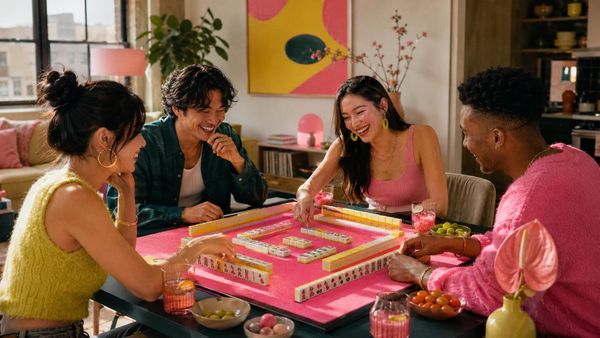
Why Mahjong Might Be Exactly What We Need in a Digital World
In a world full of screens and constant notifications, mahjong is creating new reasons for people of different generations to gather, connect, and belong. Discover how this timeless game is finding a place in modern American social life.
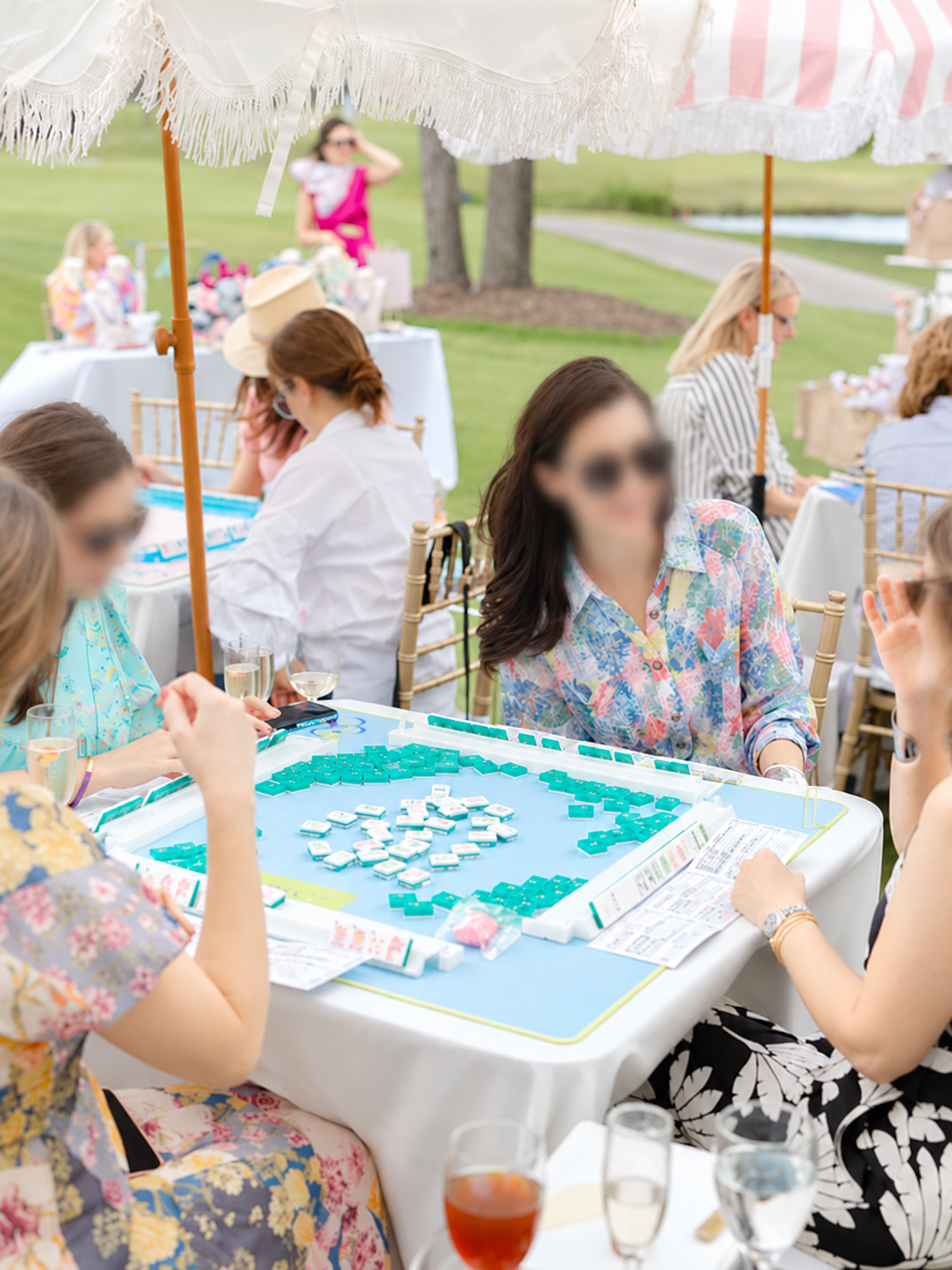
In a world full of screens and constant notifications, an old game is creating new reasons for people to gather, connect, and belong.
The Phone on the Table
I was sitting around a table with three friends when one of them placed her phone face down in the middle.
We made a small agreement: no phones. Just us, our conversation, and the time we had together.
We lasted about eleven minutes before someone reached for hers.
We laughed about it, but the moment stayed with me.
I live in a big city where life moves fast. People are always on the go, and phones are rarely far from their line of sight. Even when we're sitting together, it's easy for our attention to drift back to a screen.
Our phones help us work, learn, communicate, and stay connected with people far away. But being reachable isn't quite the same as being present.
I started wondering: What makes it easier for us to put our phones down and genuinely spend time with one another?
Maybe it's not about finding another way to stay connected digitally. Maybe it's about finding something that gives us a reason to look up, pay attention, and stay at the table.
Mahjong offers one possibility.
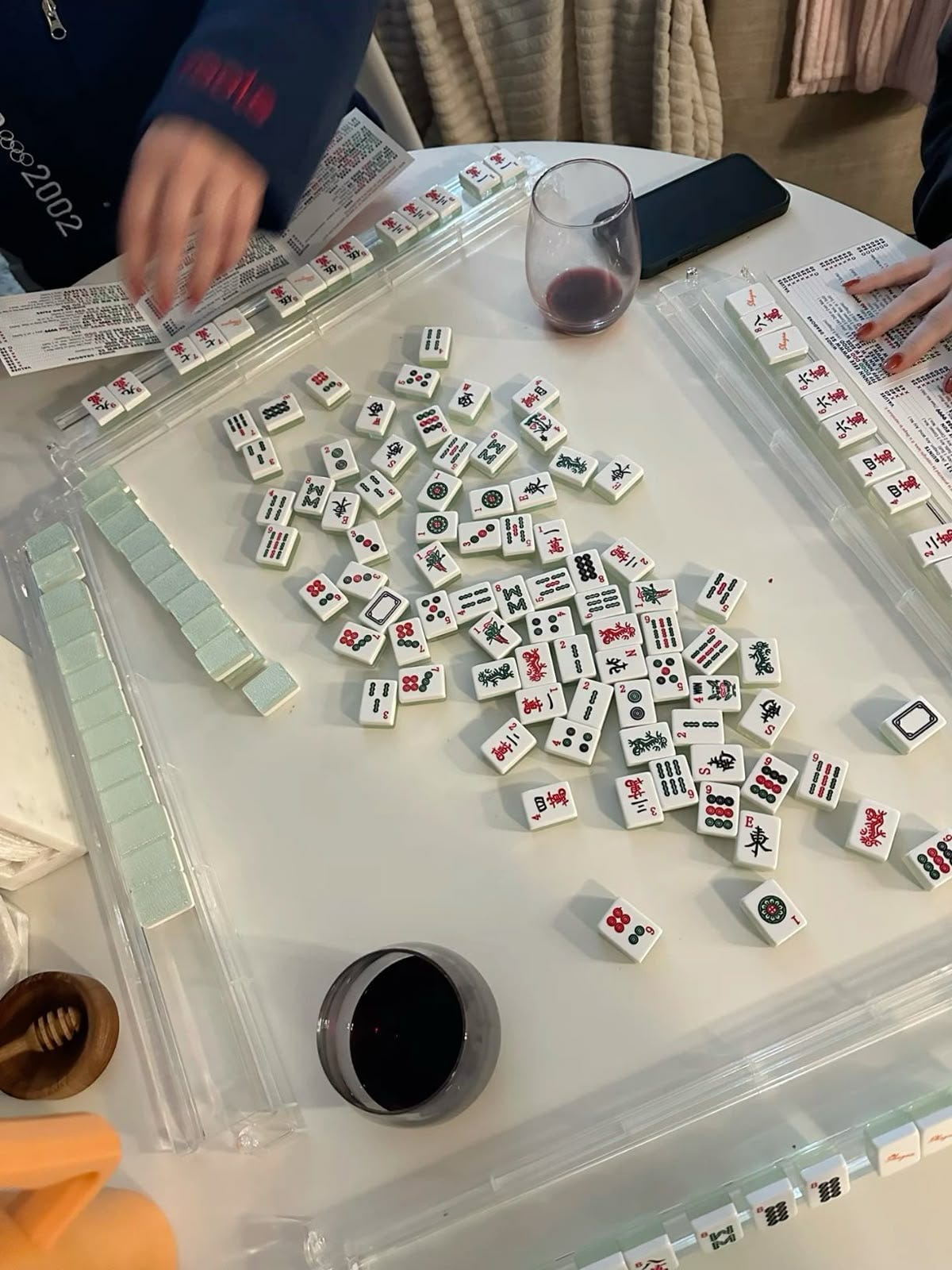
The Numbers Behind Our Need for Connection
The U.S. Bureau of Labor Statistics has tracked how Americans spend their time through its American Time Use Survey since 2003.
According to its historical data, the average time Americans age 15 and older spent on socializing and communicating as a primary activity declined from approximately 47 minutes per day in 2003 to 35 minutes in 2025—a decrease of roughly 26%. (1)
This measure needs context. It records socializing and communicating when those activities are the respondent's primary activity. It does not capture every conversation that happens while someone is working, eating, traveling, or doing something else. Nor does it measure face-to-face interaction alone.
Still, the long-term change raises an important question: how do we make room for meaningful connection in increasingly busy lives?
A separate survey points to the emotional side of that question.
In its Stress in America 2025 report, the American Psychological Association found that 54% of U.S. adults said they felt isolated from others often or some of the time. Half said they felt left out, and half said they lacked companionship. The survey was conducted online by The Harris Poll on behalf of the APA among more than 3,000 U.S. adults. (2)
These findings don't mean everyone is lonely, and they don't establish that digital technology is the cause. They do show that feelings of disconnection are a meaningful concern for many adults.
We can't solve every social problem with a game. But perhaps we can create more opportunities for people to spend time together—without needing a special occasion or a complicated plan.
And that's where mahjong comes in.
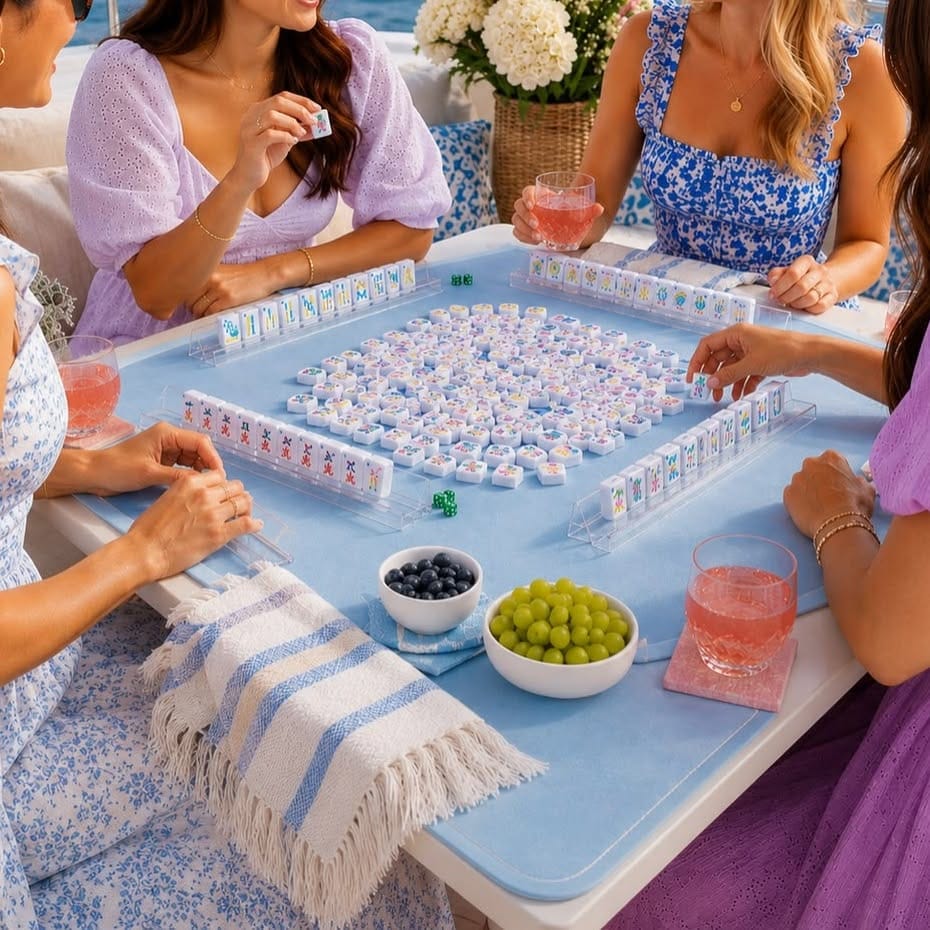
An Old Game Finding New Tables
Mahjong has a long history, originating in China before spreading to communities around the world. Today, different forms of the game are played in different places, with their own rules, traditions, and communities.
In the United States, American Mahjong has developed a particularly visible social presence. Longtime players continue their regular games, while new groups are introducing the game to people who may never have touched a tile before.
This isn't just an impression from social media.
Eventbrite reported that the number of mahjong events listed on its platform in the United States increased by 179% between 2023 and 2024. That figure measures event listings on Eventbrite—not the total number of American mahjong players—but it offers a useful indication of growing activity on the platform. (3)
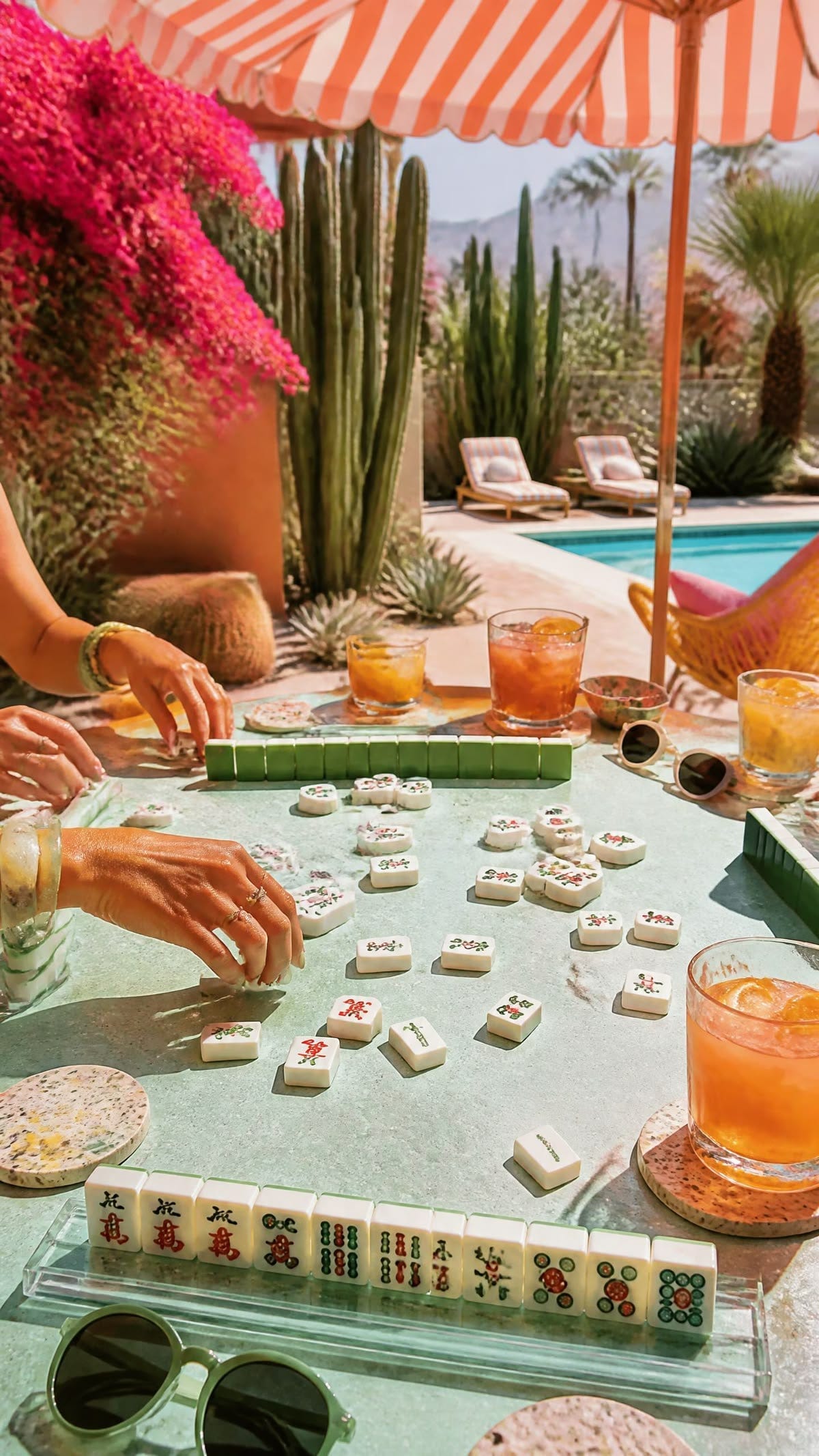
In San Francisco, the Associated Press reported on Youth Luck Leisure, a mahjong club founded by Ryan Lee after gatherings with friends grew into larger events. The club has hosted events with as many as 200 guests and 30 tables, combining instruction for beginners with music and a lively social atmosphere. (4)
These gatherings aren't simply about learning how to play. They're also about meeting people, sharing an experience, and creating a place where newcomers can feel welcome.
The same idea appears in a very different setting: the fitness and recreation industry.
Lakeshore Sport & Fitness in Chicago has advertised for a part-time Mahjong Instructor to lead one or two instructional sessions per month. The position calls for someone who can teach Mahjong 101, explain rules and strategy, help players through organized games, and create a welcoming environment for primarily beginner and intermediate adult participants. Sessions typically last two to three hours. (5)
One job listing cannot establish a nationwide trend by itself. But it illustrates something important: mahjong is being treated not only as a game people play privately, but also as an organized activity that community-oriented businesses can teach and host.
The opportunity isn't limited to experienced players. It includes people who are learning the game—and people whose main reason for showing up is to spend time with others.
Why Mahjong Brings People Together
What makes mahjong such a good setting for social interaction?
I think three things matter: touch, rhythm, and presence.
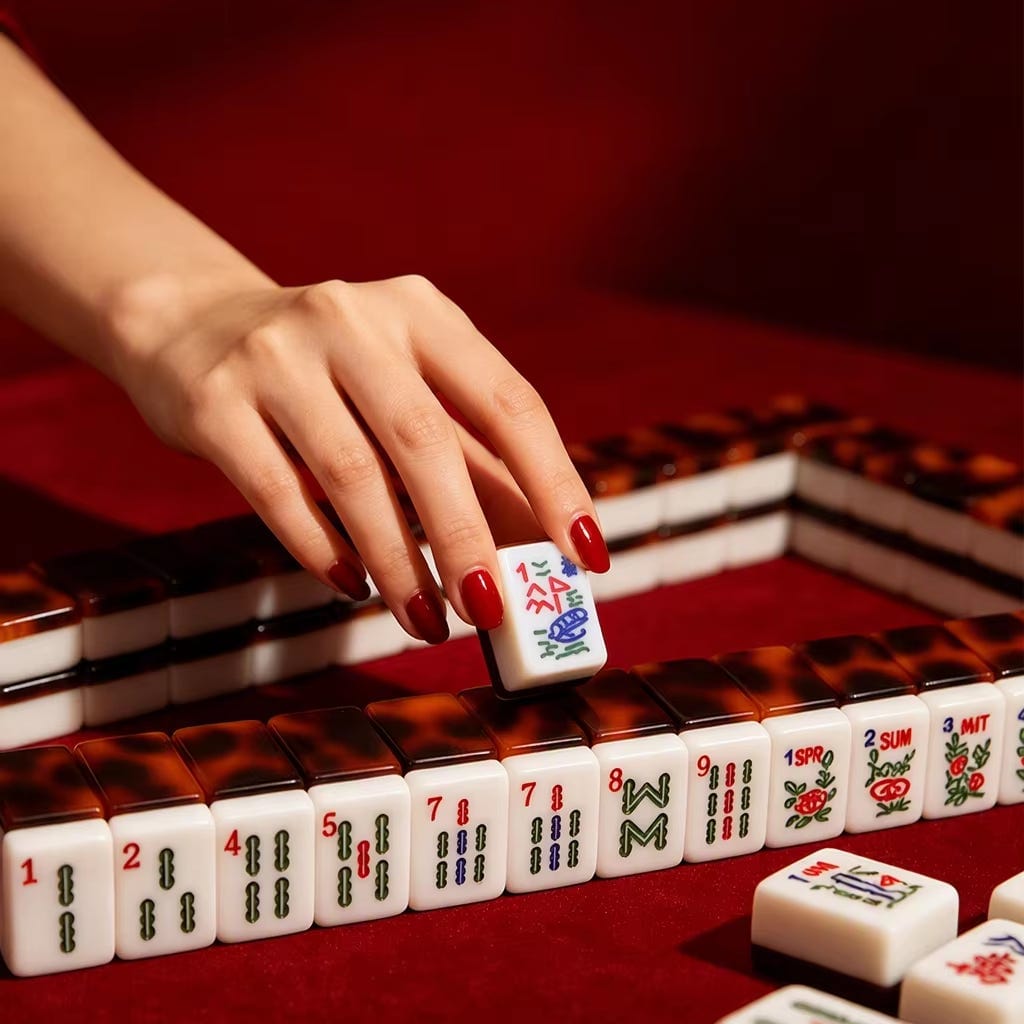
1. Touch: A Game You Can Hold
Mahjong is a physical game.
You pick up tiles, arrange them, examine their faces, and hear them click against one another. You can feel the weight of the pieces in your hand and watch the changing arrangement on the table.
In a world where so much of our leisure happens on glass screens, these physical details make the experience feel different.
This is an observation about the way the game is played, not a claim that physical tiles are medically superior to digital games. The point is simpler: mahjong gives people a shared physical activity around which conversation can develop.
2. Rhythm: Time to Talk Between Turns
Mahjong has a natural rhythm.
A player draws a tile, considers the possibilities, and discards. Others watch, think about their own hands, and wait for their next turns.
The game requires attention, but it also contains pauses.
During those pauses, people can ask questions, laugh about a surprising move, tell a story, or help a beginner understand what just happened.
The game gives everyone something to do without requiring every moment to be filled with conversation.
For people who find unstructured socializing awkward, a shared activity can offer a natural starting point. You don't have to walk into a room and immediately think of something interesting to say. You can begin with a tile.
3. Presence: A Reason to Stay at the Table
Mahjong asks players to follow the game.
You need to notice which tiles have been played, consider your options, and pay attention to what happens next. Looking at your phone during every turn can make it harder to keep up.
That doesn't mean everyone who plays mahjong puts their phone away. Nor is mahjong the only activity that encourages people to be present.
But a game with shared rules, turns, and decisions gives people a practical reason to direct their attention toward the same thing.
And when several people are paying attention to the same table, conversation often follows.
A Game With Room for Different Generations
One of the things I find most compelling about mahjong is that it isn't confined to a single age group.
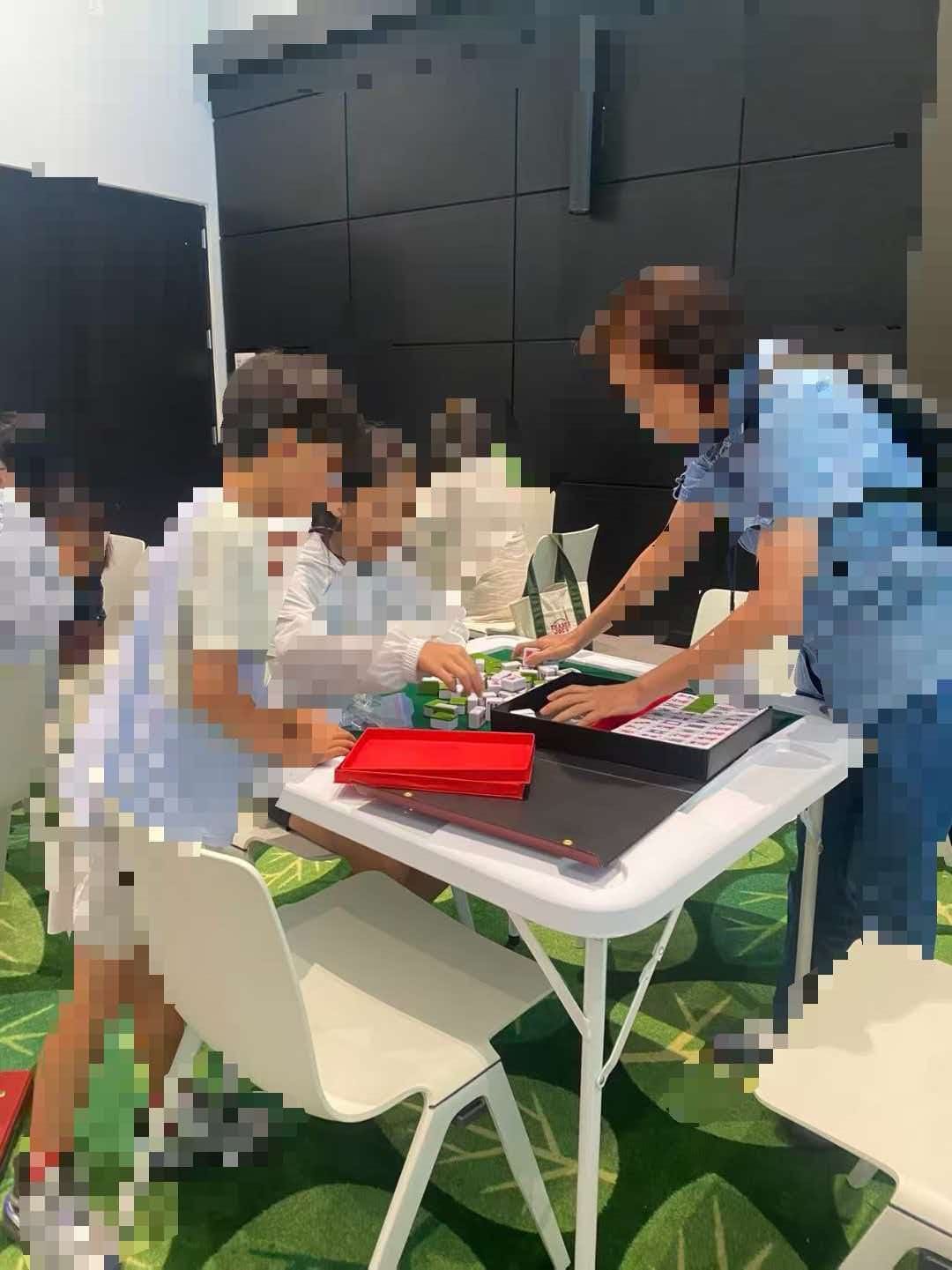
A child learning the game, a young adult looking to meet new people, a parent organizing a weekly gathering, and an older adult enjoying a regular game may all find a reason to sit at the same table.
Their motivations may differ. One person may love the strategy. Another may enjoy the social ritual. Someone else may be reconnecting with a family tradition or learning about a culture they know little about.
The game can accommodate these different reasons for participating.
In the United States, mahjong is appearing in a range of settings, from informal gatherings and recreation clubs to organized instructional sessions. The Lakeshore Sport & Fitness listing is one concrete example of a business seeking an instructor to teach adult beginners and facilitate social play. (5)
For older adults, games can also be part of the social activities offered by senior centers and residential communities. However, we should distinguish that broader possibility from a specific claim about institutional purchasing: I have not established a reliable national figure for how many U.S. retirement communities are buying mahjong sets in bulk.
That purchasing trend deserves further research. It shouldn't be presented as a verified nationwide fact without documented examples.
The larger point remains: mahjong can create a shared activity for people at different stages of life.
We don't need to claim that everyone from age 10 to 100 plays it to recognize its cross-generational potential.
It can offer something simpler: a table, a shared experience, and a reason to connect.
More Than a Game, But Not a Cure
People sometimes look to games for benefits beyond entertainment. Mahjong has also been studied in relation to cognition and psychological well-being, particularly among older adults.
A 2024 review in the Journal of Prevention of Alzheimer's Disease examined research on mahjong and health-related outcomes. The available literature suggests potentially positive associations in some areas, but the strength and quality of evidence vary. (6)
That is a reason to keep studying the game—not a reason to make sweeping promises.
Mahjong should not be described as a treatment for depression, autism, or other medical conditions. Nor can we assume that playing it will eliminate loneliness.
What we can say is that organized mahjong gives people an opportunity to meet, learn, interact, and participate in a shared activity. For some, that may become a meaningful part of a wider social life.
The distinction matters.
We don't need to turn every enjoyable activity into a medical intervention to recognize its value.
Sometimes the value lies in having somewhere to go on a Tuesday evening, people who expect you to show up, and a game that gives everyone a reason to gather.
What This Means to Me
When I began exploring the American mahjong market, I was interested in more than tiles, colors, and product design.
I wanted to understand why people were making time for this game—and why it was finding a place in the lives of people who had never grown up playing it.
The more I looked, the more I saw a connection between the game and something much larger: our desire to belong.
People may arrive because a friend invited them, because they want to learn a new skill, because they are curious about the game's cultural roots, or simply because they want an enjoyable way to spend an evening.
They may stay because they discover a community.
That idea is part of why I founded Flamingo Mahjong.
For me, the product is only one part of the story. The table is where the experience happens. The people are what give it meaning.
I want to build a brand that respects mahjong's cultural heritage while making it welcoming to new players—a brand that sees the game not just as something to own, but as something to share.
A Table Is a Beginning
Mahjong isn't a cure for loneliness. It won't solve every problem created by modern life, and it doesn't have to compete with technology to prove its worth.
It offers something more modest, and perhaps more useful: a reason to gather.
Four people. A set of tiles. A few hours in which everyone has a place at the table.
Maybe connection doesn't always begin with a deep conversation or a grand gesture. Maybe sometimes it begins with someone asking, "Would you like to learn how to play?"
When was the last time you spent a few hours with friends, fully present, without feeling the need to check your phone?
I'd love to hear what brought you together.
Further Reading
- American Psychological Association. Stress in America 2025.
https://www.apa.org/pubs/reports/stress-in-america/2025/ - Axios. Reporting on the growth of mahjong events and instruction in the United States.
https://www.axios.com/2025/09/28/mahjong-teacher-lesson - Associated Press. Reporting on the growth of mahjong social events in San Francisco.
https://apnews.com/article/b0dea60bce21804756c0d5c241571056 - Lakeshore Sport & Fitness. Mahjong Instructor job listing.
https://lakeshoresportandfitness.applytojob.com/apply/1IIAeMkfd0/Mahjong-Instructor - Tse, Z. C. K., et al. (2024). Does Playing Mahjong Benefit Older Individuals? A Scoping Review. The Journal of Prevention of Alzheimer's Disease.
https://pmc.ncbi.nlm.nih.gov/articles/PMC11436455/ - The News in Data — About a quarter fewer Americans socialize on an average day than in 2003, but those who do still spend about two hours An analysis of U.S. Bureau of Labor Statistics American Time Use Survey data, showing changes in the average time Americans age 15 and older spend socializing and communicating between 2003 and 2025.
🦩 Find Your Flock.
— Emirry Zhang
Founder, Flamingo Mahjong